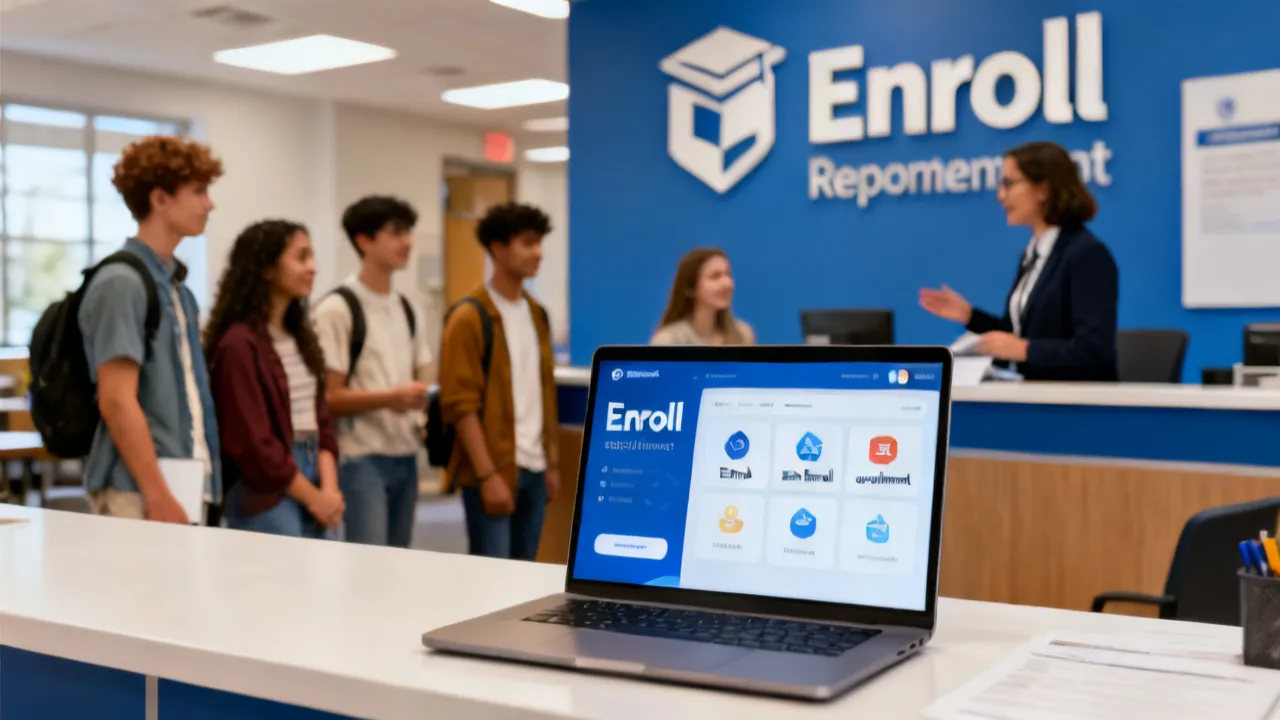
How Enroll Programs Work with Enrollment Options
This guide explains how Enroll programs are structured, what “Emb Enroll” typically signifies, and how enrollment decisions are evaluated. Objectively, it outlines common enrollment workflows, terminology used by suppliers and institutions, and the criteria learners should verify before enrolling, including requirements, timelines, and documentation.

Key Takeaways on “Enroll” Decisions and “Emb Enroll” Context
Choosing an Enroll pathway is less about a single click and more about aligning eligibility, documentation, timing, and total program fit. Many learners treat enrollment as a lightweight administrative step—something that happens after they “say yes.” In reality, enrollment decisions often determine which rules apply to you: what you must submit, how fast you will be reviewed, what schedule governs your learning, and which entity you will interact with during onboarding and support.
When you encounter the term Emb Enroll, treat it as a label for a specific enrollment route or embedded enrollment workflow that must be confirmed with the relevant supplier or institution. The responsible approach is to treat it as an operational classification rather than a vague synonym. Your top next step is to verify requirements, start dates, and pricing structure directly with the provider before committing.
In practical terms, “Emb Enroll” can affect any or all of the following: the documents required, the onboarding timeline, the fees and who collects them, the contract holder, the way you receive learning access, and even how certification or evidence of completion is issued. Because the term is not universally standardized, your verification process should be consistent: request definitions in writing, ask who does what, and confirm the exact fee and policy schedule.
What “Enroll” Usually Means in a Practical, Objective Sense
In education, training, and credentialing contexts, Enroll refers to the official process by which a learner becomes an active participant in a program. Although branding may vary (for example, “apply,” “register,” “join,” “start your program,” or “confirm your seat”), the operational meaning typically includes application intake, eligibility verification, confirmation of documents, and acceptance into a cohort or track.
It is useful to treat the enrollment process as a chain of decisions and checks rather than a single event. Even when systems make enrollment appear instantaneous—such as a web form plus a digital receipt—there is usually a back-end sequence. Providers often validate identity, verify prerequisites, confirm that the chosen track is available, check payments or sponsorship eligibility, and finalize the administrative record that determines when you can access learning materials.
From an industry perspective, the term is intentionally broad because it covers multiple program models. Some providers enroll students individually for rolling starts; others enroll cohorts on fixed dates. Some handle admissions through a third-party supplier; others manage it directly. Some combine enrollment with onboarding into a single flow, while others separate the process: you enroll first, then complete onboarding steps before learning begins.
A practical way to understand “Enroll” is to ask what changes immediately after enrollment is confirmed. Common changes include:
- Access to a learning platform or program orientation is enabled
- Your enrollment status becomes official (e.g., “accepted,” “active,” or “registered”)
- Your cohort schedule is assigned or your start date is confirmed
- Administrative communications and policy documents become applicable
- Assessment registration rules may activate (including exam booking or proctoring setup)
If the provider cannot clearly explain what “Enroll” triggers—administratively and practically—it’s a sign you should request more detail before proceeding.
Understanding “Emb Enroll” as a Potential Enrollment Route
Emb Enroll is not a universal global standard term, so it should not be assumed to mean the same thing everywhere. In practice, it often appears as a shorthand for an embedded enrollment workflow—meaning enrollment is initiated through a partner pathway, integrated system, or a specific administrative flow.
Because the meaning can vary, the responsible approach is to confirm the definition with the supplier or institution that uses the term. Ask whether it implies:
- Different documentation requirements than standard enrollment
- A distinct pricing structure (e.g., program fee allocation, administrative fee, or managed onboarding)
- A different schedule or intake window
- A different level of support during the onboarding phase
To make this actionable, it helps to ask “what changes for me” rather than just “what does it mean.” For example: “If I choose Emb Enroll, will I still be required to provide the same proof of identity? Will my enrollment be approved by the same team? Will my certificate be issued by the same institution?” Those questions force the provider to map the workflow difference in concrete terms.
Additionally, “embedded” sometimes indicates that enrollment is integrated into another program or process. For example, an employer might sponsor employees through an embedded pathway; a bootcamp partner might route applicants through a supplier’s system; or a licensing program might include an embedded enrollment step for compliance documentation. Each scenario can change where you submit documents, who verifies them, and which policies govern refunds or withdrawal.
How Pricing Typically Factors Into Enrollment Choices
You mentioned price information in the prompt, but no specific numbers were provided. To keep this guide objective and usable, the focus should be on how enrollment pricing is commonly structured rather than stating unverifiable amounts.
Across education and training supply chains, pricing can include both direct learning costs and operational costs. In many programs, learners pay for access to instruction and learning resources, plus the administrative work required to register them, verify eligibility, manage assessments, and issue completion evidence. If you only look at one “total price” line, you can miss what that total includes—or what it excludes.
Pricing often includes the following components:
- One-time enrollment or onboarding fees
- Program tuition billed per module, term, or cohort
- Assessment or certification fees
- Support add-ons (tutoring, mentoring, proctoring, or learning platform services)
- Administrative charges tied to identity verification, documentation review, or compliance
- Technology or access fees if learning tools extend beyond the program’s core duration
Industry top practice is to provide a transparent breakdown before acceptance. If a provider describes pricing only in broad terms (for example, “the price includes everything”), request a written schedule of fees and what each line item covers. A written schedule should also specify due dates, payment method options, and whether late payments affect access.
When Emb Enroll is involved, pay special attention to who charges you. Sometimes embedded workflows route payments through a partner entity or allocate fees between the institution and a supplier. The result can be that the learner sees a fee total quickly, but the detailed fee responsibilities remain unclear. Ask for:
- Who invoices you (which organization)
- Which organization holds the contractual relationship for tuition and services
- Whether any portion is non-refundable and under what conditions
- Whether any additional fee is triggered after onboarding (e.g., assessment booking, rescheduling, or extra proctoring)
Even if you are not currently concerned about fees beyond the current invoice, fee structure influences your leverage during disputes. When learners know what each fee funds, it becomes easier to request remediation if something goes wrong.
Supplier and Provider Considerations: Who Actually Delivers the Program?
When evaluating an Enroll pathway—especially one associated with Emb Enroll—the “supplier” is central. In many markets, the entity that markets the program is not always the entity that delivers it. Marketing partners, education platforms, and administrative resellers can create a multi-actor environment.
To reduce risk, confirm:
- Which organization provides instruction and assessments
- Who handles enrollment administration and document review
- Where the learning resources are hosted (platform, curriculum owner, support desk)
- What the contract terms say about refunds, deferrals, and withdrawal
- Which entity issues the credential (certificate, transcript, badge, or statement of attainment)
A useful way to think about this is to map the “life of your learner record.” Your learner record may be created by one party, updated by another, and assessed by a third. The risk is that you may be told to contact the wrong entity when you have a problem.
Therefore, ask practical questions that reveal the real structure, such as:
- “If my documents are rejected, which team sends the decision?”
- “If I need to reschedule an assessment, who approves the change?”
- “If I do not receive access within X days, who fixes it?”
- “If there is a dispute about outcomes, which policy applies?”
When you get clear answers and a named support path, you reduce friction and increase your ability to resolve issues quickly.
Enrollment Workflow: What Happens After You Decide to Enroll
Even when branding differs, enrollment workflows frequently follow a similar pattern. Below is a clear, objective outline of what learners should expect after choosing an Enroll option. You can use this as a checklist for what you should receive (or at least be told) at each stage.
- Application submission: personal details, program selection, and baseline eligibility information.
- Document validation: identity checks and verification of prior credentials (if applicable).
- Eligibility review: confirmation that prerequisites are met.
- Offer and acceptance: official acceptance into a cohort or track, often with required confirmations.
- Onboarding: orientation, platform access, and schedule communication.
- Start of learning: modules begin, with attendance or progress expectations depending on the program.
In an Emb Enroll workflow, the same stages may exist, but the ownership of each stage can shift. For instance, documents might be submitted to a partner portal, eligibility might be verified by a supplier team, and onboarding might happen via an integrated system that routes you to the primary platform. The result is that the “shape” of the workflow can look the same to a learner, but the operational sequence and responsibilities may differ.
To avoid confusion, confirm what you will receive after each stage. For example:
- After application: a confirmation email and expected review timeline
- After document validation: a status update and whether any corrections are required
- After acceptance: a start date, track details, and payment confirmation instructions
- After onboarding: access credentials, communication schedule, and first assignment or orientation task
If the provider cannot provide a consistent “what happens next” sequence, you may experience delays that are hard to predict—especially in embedded enrollment pathways.
Conditions and Requirements You Should Verify Up Front
Enrollment is often where learners discover mismatches between their expectations and program requirements. To avoid preventable setbacks, ask a provider—whether the pathway is standard Enroll or an Emb Enroll route—about the following:
- Eligibility requirements (minimum education, experience, language proficiency, age restrictions)
- Application deadlines and how late submissions are handled
- Documentation list and accepted formats
- Payment schedule: when fees are due and how installment plans work
- Attendance or participation rules: required sessions, minimum engagement thresholds
- Assessment rules: exam dates, retake policies, and certification criteria
- Change policies: deferrals, transfers, or program substitutions
- Communication expectations: response times, acceptable contact channels, and escalation pathways
It’s also valuable to understand the difference between a “requirement” and a “preference.” Some programs treat certain criteria as strict gates. Others use them to recommend readiness. When the provider documents prerequisites, ask which are mandatory for acceptance and which are advisory for success.
For example, a provider might say “experience in a related area is recommended.” That might not prevent enrollment, but it could affect your placement level, support intensity, or assessment readiness. Similarly, some programs accept enrollment with conditional documentation (e.g., transcripts pending), while others reject until documentation is complete.
For embedded workflows, the documentation list can become more specific. Partners sometimes request additional proof for their administrative processes (for example, employer eligibility for sponsored seats). Therefore, verify:
- Whether documents are checked by the institution or by a partner
- Whether a partner portal uses different upload requirements
- Whether there is a separate approval step for embedded enrollment
Localization Note: How to Interpret Enrollment Terminology in “nearby” Markets
You requested replacement of any city/country placeholders with “nearby”. Since no specific location was provided in the keywords, the very practical localization guidance is linguistic rather than geographic: providers in “nearby” markets often translate enrollment terminology into local equivalents. However, the underlying administrative meaning usually remains tied to eligibility verification, administrative processing, and cohort assignment.
Therefore, treat local-language terms as functional equivalents of Enroll processes, and always confirm what the specific label—such as Emb Enroll—means operationally with the supplier.
In practice, local terminology can create confusion in two ways:
- False equivalency: two terms may sound similar but map to different administrative workflows.
- Different emphasis: one term may stress “registration,” while another emphasizes “acceptance,” “seat confirmation,” or “start date assignment.”
To prevent misunderstandings, rely on operational questions rather than linguistic assumptions. For example: “Is my application processed as standard or embedded? Who verifies my documents? What is my expected review time? Will this change my contract or payment terms?” Those questions remain valid regardless of language or local naming conventions.
Comparison Table (Provider and Enrollment Model Reality Check)
| Enrollment Model | What It Often Looks Like | Where “Emb Enroll” May Appear | Key Questions to Ask |
|---|---|---|---|
| Standard Enroll (Direct) | Application through the main institution or primary provider | Sometimes used for embedded onboarding within the provider’s own systems | Who verifies documents? What is the full fee breakdown? Who issues the credential? |
| Partner-Supplied Enrollment | Third party collects applications and may coordinate onboarding | Often used to signal an embedded partner workflow | Which entity holds the contract? Who delivers learning? Who handles refunds? |
| Cohort-Based Enrollment | Fixed intake dates, cohort schedules, structured deadlines | May indicate a specialized cohort track or integrated admission route | Are there strict start-date requirements? What happens with delays? Are enrollment windows strict? |
| Rolling Intake Enrollment | Admissions accepted continuously, start dates vary | May indicate a faster onboarding lane | How is priority handled? Are late-start fees different? What is the latest document submission date? |
Industry Source Basis and Responsible Framing
Because the prompt provided no specific factual dataset (e.g., exact pricing, names of suppliers, or location details), this guide intentionally avoids making claims about market growth, conversion rates, or performance figures that cannot be verified. Instead, it frames enrollment decision-making as a practical evaluation process based on common governance, consumer-protection expectations, and operational clarity that reputable providers aim to maintain.
For broader context on education program evaluation practices, learners and providers commonly reference frameworks and guidance from reputable bodies such as:
- International standards for quality management (e.g., ISO 9001-style approaches used in process control)
- Regulatory and consumer-protection principles that emphasize transparent fees and clear contractual terms
- Accreditation and institutional governance norms that require defined curricula, assessment rules, and documented policies
If you share specific supplier names, price figures, and your target market, the comparison can be refined with more precise, sourced details—such as how fees are allocated between institutions and partners, how embedded enrollment routes are contractually defined, and how support responsibilities are documented.
Until that data is available, the most reliable approach is to use the verification questions in this guide and request documentation from the provider. Policies should be written, consistent across channels, and available before you accept an offer or make irreversible payments.
Step-by-Step Guide to Evaluate an “Enroll” Offer (and an “Emb Enroll” Track)
The steps below provide a practical decision framework. They are designed to be applicable whether you are considering a typical Enroll route or a specialized Emb Enroll workflow. The goal is to reduce uncertainty by converting marketing language into verifiable operational facts.
-
Clarify terminology in writing
Ask the supplier to define “Emb Enroll” in plain language: what makes it different from standard enrollment, and what changes for the learner. Request that the answer be documented in an email or in the contract/addendum. -
Request a fee schedule
Obtain a line-by-line list of all charges (tuition, onboarding, assessments, platform access, and any administration fees). Confirm due dates and whether payments unlock access. -
Verify eligibility requirements
Confirm prerequisites (education, experience, language requirements, or any minimum age constraints). Avoid assumptions based on similar programs. Ask whether prerequisites change under Emb Enroll. -
Confirm supplier roles
Identify who handles admissions, who delivers content, who administers assessments, and who provides support. Ask who is responsible when issues occur (for example, missing access, late approvals, or assessment booking problems). -
Check timeline and start-date consequences
Ask what happens if you cannot start on time. Policies for deferrals and rescheduling should be explicit. In embedded enrollment, ask whether the partner controls the timeline or whether the institution controls it. -
Review contract terms carefully
Focus on withdrawal, refund/credit rules, and the process for dispute resolution. Confirm whether the embedded enrollment route has different withdrawal terms. -
Evaluate support and learning resources
Determine what you receive after you choose to Enroll: learning materials, tutor access, office hours, and progression tools. Ask whether support channels differ for Emb Enroll and whether response times are the same. -
Confirm evidence of completion
Ensure you understand certification criteria, assessment grading standards, retake policies, and how certificates are issued. Ask whether the credentialing entity differs under Emb Enroll. -
Ask about onboarding logistics
Request a timeline for onboarding tasks: how quickly you will receive login details, when the first orientation session occurs (if any), and what you must complete before you can access modules. -
Confirm data handling and privacy expectations
If a partner is involved in Emb Enroll, ask which organization receives your documents and how they are stored. Ensure you understand how personal data is handled during identity verification.
Key Conditions and Requirements (What Must Be True to Proceed)
Below is a checklist of common conditions that providers often require for enrollment completion. Availability varies by program, but these are typically the kinds of requirements tied to onboarding and attendance. Use it as a verification tool when you evaluate Enroll options.
- Valid identification and accurate personal information
- Required prior credentials (if the program has prerequisites)
- Document approval window (submission deadlines and review timelines)
- Payment confirmation by a stated date to secure the seat
- Account setup completion for any learning platform access
- Acceptance of program terms including attendance and assessment expectations
- Consent to assessment or proctoring procedures where applicable
- Attendance minimums or engagement rules tied to progress eligibility
Embedded pathways can add extra conditions related to partner administration. For example, a partner might require additional forms, eligibility statements, or proof of sponsorship. The key is to confirm whether these are mandatory and whether missing them delays your access or cancels your seat.
If you want to be extra precise, ask the provider to describe the state changes for your learner record. For example: “What is the status after application? After document submission? After acceptance? When does the platform access get enabled?” A clear answer to that question reduces the likelihood of surprises.
Operational Risks to Watch When “Emb Enroll” Is Involved
When enrollment is labeled as Emb Enroll, it can imply an embedded workflow. That sometimes introduces complexity because multiple parties may be involved. The main risks are not “bad intent,” but process friction: delays, unclear responsibility, and differences in communication channels.
Examples of operational risks include:
- Slower document review if responsibility is shared between partners
- Ambiguity in who issues certificates if supplier roles differ
- Inconsistent fee communication when administrative handling is outsourced
- Different support channels (e.g., customer service via partner instead of the institution)
- Discrepancies in policy application if different documents apply to embedded routes
- Assessment coordination delays if exam booking depends on multiple approvals
These risks are manageable if you confirm responsibilities and obtain clear documentation before you proceed to Enroll. The goal is not to assume anything will go wrong. The goal is to ensure that, if something does go wrong, you know who to contact and what resolution process applies.
To reduce uncertainty further, request a “single source of truth” document—such as a handbook, a contract addendum, or a FAQ that specifically covers the Emb Enroll workflow. A reputable provider can typically produce this without difficulty.
Common Enrollment “Gotchas” (Regardless of Track)
While Emb Enroll adds potential complexity, there are also common enrollment issues that appear in both standard and embedded routes. These are useful to check because they directly affect your experience.
- Ambiguous start dates: some providers list a month, but the exact start date is assigned later.
- Access delays: you enroll but platform access is granted after payment or after onboarding completion.
- Hidden conditions for refunds: refund rules can depend on how many modules were accessed or on assessment submission timing.
- Retake restrictions: retake policies may limit the number of attempts, change fees, or require waiting periods.
- Engagement requirements: participation may be measured in ways not obvious from marketing materials (for example, minimum quiz completion or scheduled check-ins).
- Credential issuance timing: certificates may be issued after administrative verification, sometimes weeks after course completion.
- Timezone differences for live sessions: if the program includes live elements, schedules might be anchored to a specific region.
When you request details from the supplier, these “gotchas” are excellent prompts to use. They move the conversation from generic claims to operational specifics.
How to Ask Better Questions (A Practical Script)
Sometimes the enrollment conversation feels repetitive: you ask “what do I need,” and the provider repeats general information. To get clarity, use a question structure that forces the provider to provide evidence and specifics.
Consider using questions like these:
- “Can you confirm the exact start date and the time zone that applies to the first learning activity?”
- “Under Emb Enroll, what documents are required, and which partner team performs the verification?”
- “Who should I contact for platform login problems—your institution or the partner?”
- “If my documents are rejected, what is the timeline and how do corrections work?”
- “Please provide the fee schedule with due dates and clarify which fees are refundable versus non-refundable.”
- “Which organization issues the certificate, and what is the expected issuance timeline after completion?”
- “If I need to defer, will I retain the same tuition, or does the embedded route change pricing?”
Asking these questions in writing helps you keep records and compare responses across channels (website, chat, and email). If you receive inconsistent answers, treat that as a risk marker and request reconciliation in writing.
Practical Decision Checklist Before You Commit
Before you finalize Enroll (or Emb Enroll), you can use a compact checklist to confirm that you have the operational basics. This is not a substitute for reading contracts, but it improves your odds of making an informed choice.
- Definition confirmed: you have a written explanation of what Emb Enroll changes.
- Eligibility verified: you meet all prerequisites and understand any conditional acceptance rules.
- Document list clear: you know exactly what documents to submit and accepted formats.
- Start date defined: you know the start date, time zone (if applicable), and what happens if you cannot start.
- Fee schedule received: you have a line-by-line pricing breakdown and due dates.
- Contract holder known: you know who holds the contract and who provides the services.
- Support path identified: you know where to get help during onboarding and during learning.
- Assessment and credential rules known: you know retake policies and certification issuance timing.
- Withdrawal/refund rules checked: you understand how withdrawal works and what you may lose.
If any item is unclear, you are still “before committing.” Ask until it becomes clear or until you decide that the uncertainty is unacceptable.
FAQs
1) What does “Emb Enroll” mean?
“Emb Enroll” is not a universally standardized term. It typically indicates a specific enrollment route or an embedded workflow managed through a partner pathway or integrated administrative process. Ask the supplier for a written definition and how it changes documentation, timelines, or pricing compared with standard Enroll.
If you receive only a vague explanation, ask the provider to answer the practical implications: “What changes for documentation? Who validates it? Who provides onboarding access? Who issues completion evidence?” That is usually where the real meaning becomes clear.
2) How do I verify the price for an Enroll program?
Request a line-by-line fee schedule with due dates and what each item covers (tuition, onboarding, assessments, platform access, and any administration fees). Confirm whether fees differ under an Emb Enroll track and whether any additional costs apply after acceptance.
Also ask whether payment timing affects access. Some programs unlock learning only after a specific payment stage. If you plan to pay in installments, confirm whether partial payment grants partial access or delays everything until full payment is made.
3) Who should I contact if I have enrollment questions?
Contact the supplier responsible for enrollment administration and ask them to clarify the support chain: who reviews documents, who confirms acceptance, and who provides learner support after onboarding.
When a partner is involved, ask for a named escalation pathway—such as a support email address, a help desk link, or a supervisor contact for unresolved issues. Without that, your questions may bounce between teams.
4) Are the requirements the same for standard Enroll and Emb Enroll?
Often they are similar, but they may not be identical. Some embedded enrollment workflows adjust documentation, timing windows, or cohort assignment rules. Always request the exact requirements list for the specific track you plan to Enroll in.
Asking “exact requirements” rather than “are requirements the same” tends to produce more concrete information and helps you avoid assumptions.
5) Can I switch tracks after I Enroll?
Switching policies vary by provider and may depend on cohort schedule and fee rules. Ask about deferrals, transfers between tracks, and whether switching changes your total cost or assessment eligibility.
Be especially careful if embedded routes have different contract addenda. Sometimes switching requires a new invoice or triggers different refund terms, even if the learning content is the same.
6) What documentation is typically required?
Common items include identity documents and evidence of prior credentials when prerequisites apply. For some programs, additional forms related to eligibility and consent are required during onboarding. Confirm the precise list before you begin enrollment.
Also confirm the accepted formats (scanned PDFs, original uploads, notarized documents, etc.). If documents are not accepted in a certain format, your review timeline could be delayed.
7) How long does the enrollment process take?
Timelines depend on document review capacity, eligibility checks, and intake schedules. If you’re using an Emb Enroll pathway, ask whether review runs through one team or multiple parties—this often affects lead times.
To make timelines realistic, ask about average review times and worst-case scenarios. “Average” can be misleading if you have a hard start date requirement.
8) What should be included in the acceptance confirmation?
Acceptance confirmation should specify cohort/start date, program or track name, payment schedule, any onboarding steps, and key policies. If the provider uses an Emb Enroll label, ensure the confirmation clearly states what that track entails.
Good acceptance confirmation also indicates the next administrative tasks you must complete and the deadlines for those tasks.
Conclusion: Making Enrollment Decisions with Clarity and Verified Inputs
When you decide to Enroll, your goal should be clarity: confirm requirements, verify the supplier’s responsibilities, and ensure pricing is transparent. Enrollment is often where the real contractual and operational obligations become active, so you should treat it as a decision point that deserves documentation and verification.
If you encounter Emb Enroll, treat it as a prompt for due diligence rather than a guarantee of a simplified process. Because the term can vary by provider and market, the only safe assumption is that it changes something operational—or at minimum, it signals an embedded workflow worth understanding.
With a structured approach—especially the checklist steps above—you can make enrollment choices that are aligned with your timeline, expectations, and documentation readiness. Your best protection is not skepticism; it’s informed clarity: written definitions, line-item fees, known responsibilities, and explicit policies for start-date changes and withdrawal outcomes.
Optional Next Step (If You Want This Tailored)
If you share the specific supplier name, the exact price components, and the meaning of “Emb Enroll” used in your context, I can refine the comparison table and conditions section into a more precise, situation-specific guide while keeping the same objective, verifiable approach.
To do that effectively, it helps if you also share (1) the program type (course, credential, cohort training, assessment-only track), (2) whether there are live sessions or assessments with fixed dates, and (3) who your contract is with (the institution or a partner). With those details, the “questions to ask” can be narrowed to the exact decision points that matter for your case.