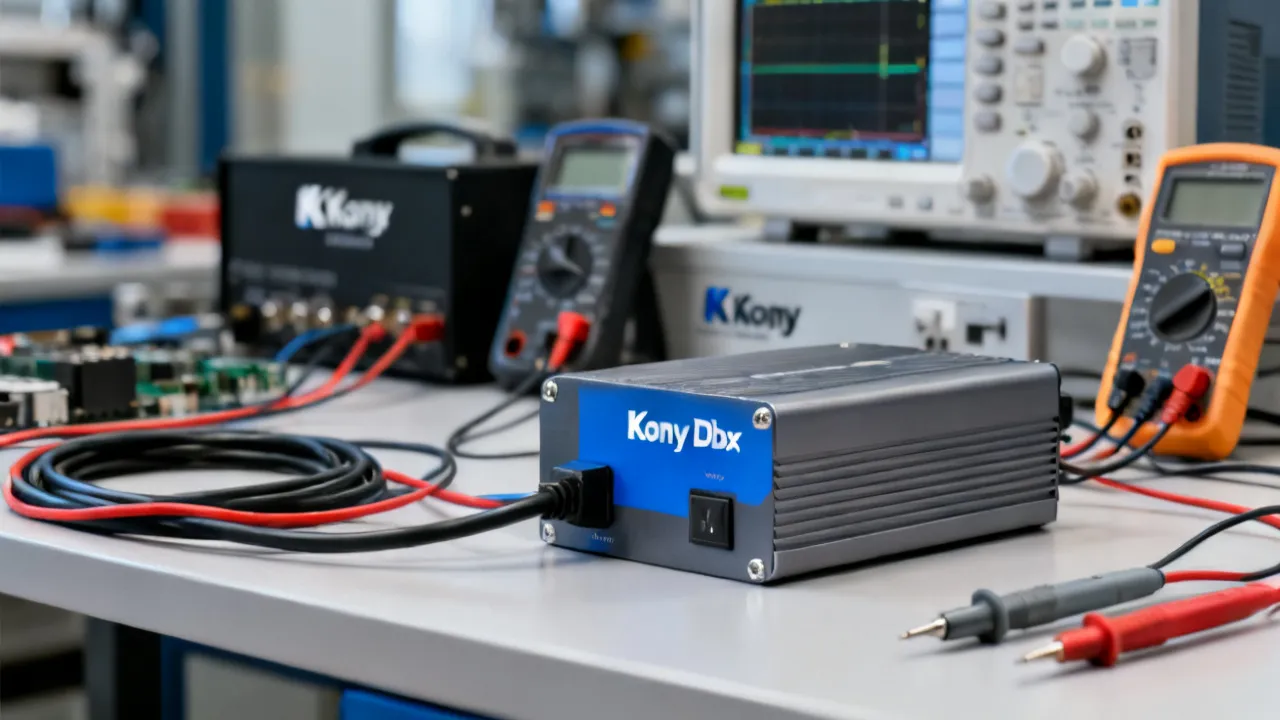
Kony Dbx: Supplier, Pricing, and Selection Guide
Kony Dbx is top evaluated through supplier quality, documented specifications, and a clear pricing context before committing. This guide explains what “Kony Dbx” generally refers to in industrial procurement, why technical compatibility matters, and how buyers near major logistics hubs should compare options objectively using practical requirements and expert selection logic.
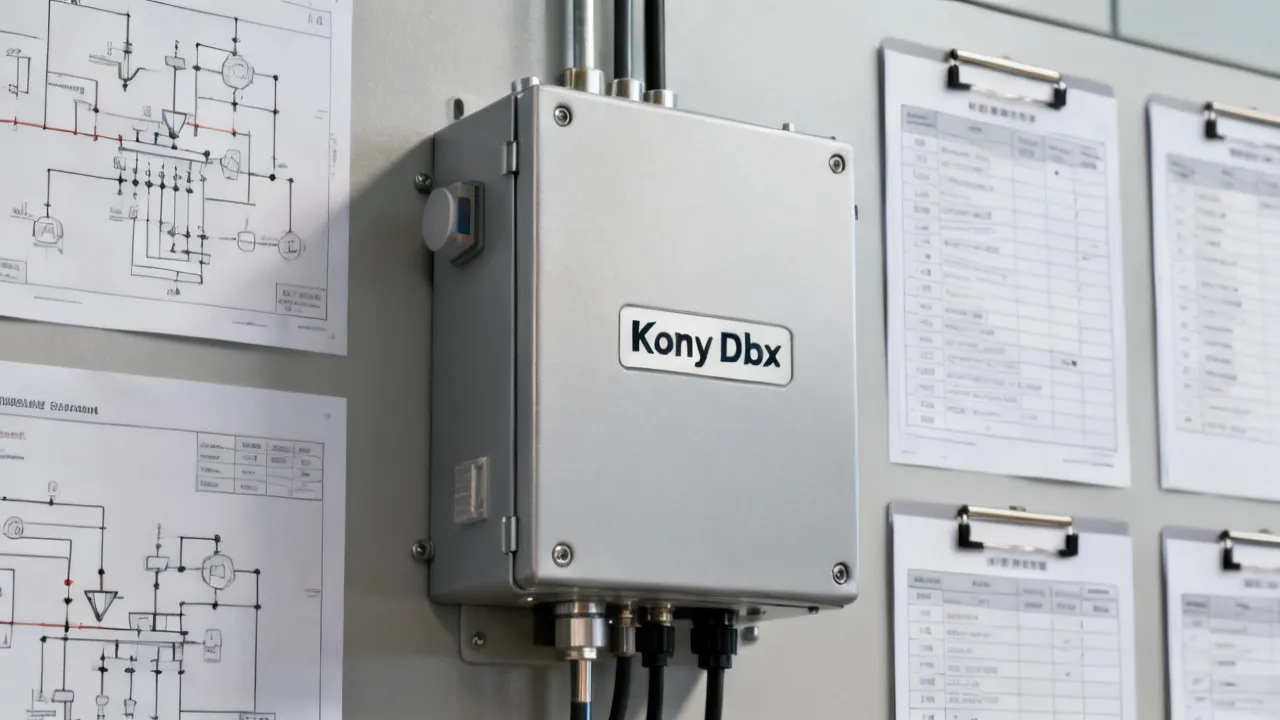
Why Kony Dbx procurement should start with compatibility, not assumptions
When buyers search for Kony Dbx, the decision should begin with technical compatibility and verifiable supplier capability. In very purchasing workflows, the “right” option is not simply the lowest quote—it is the configuration that matches your use case, documentation standards, delivery expectations, and after-sales support. This guide frames Kony Dbx as an industrial procurement item (or system component) and walks you through objective selection criteria, including how to interpret pricing and supplier information responsibly.
From an industry perspective, the very common procurement failure mode is treating a product name as sufficient proof of performance. In reality, buyers need to confirm the model variant, versioning, interface requirements, installation assumptions, and maintenance constraints. These details directly affect total cost of ownership (TCO), risk, and integration timelines—especially when you are sourcing through distributors or contract suppliers in your nearby region.
Below, you’ll find an expert-style inverted pyramid: the very critical points first, then deeper analysis, practical comparison structure, and a set of FAQs to clarify typical confusion around Kony Dbx supplier selection and pricing interpretation.
Critical selection criteria for Kony Dbx: the “must-check” items
Before you compare quotes, capture and verify the following. These are the criteria that reduce integration delays and downstream operational risk. The main theme is simple: if you cannot verify scope and compatibility, you cannot responsibly estimate cost, schedule, or performance.
Also remember that in most industrial purchases, the buyer’s cost is not limited to the invoice line. The buyer pays in time, engineering effort, test cycles, and sometimes downtime—especially during commissioning or early operations. Therefore, a quote that “looks” cheaper may actually be more expensive when the hidden work is added. Starting with compatibility avoids that trap.
1) Exact configuration and version
“Kony Dbx” may be referenced differently across catalogs, invoices, and supplier listings. Confirm the exact part number/model, software/firmware revision (if applicable), and any bundled accessories or modules included in the price. In practice, this means you should insist on receiving documents or quote attachments that show the exact configuration identifier (SKU/part number/revision/variant code) rather than relying on product-name shorthand.
Why this matters: version mismatches create “works in theory” situations where the hardware is installed but refuses to integrate properly—through interface incompatibilities, unsupported feature sets, licensing differences, or altered wiring/connector conventions. When a project timeline is tight, even small mismatches can consume days or weeks to resolve.
2) Documented specifications
Request datasheets, compliance statements, and interface documentation. Prefer supplier-provided documents that clearly match your selected configuration. If documentation is missing or vague, you should treat the quote as operationally incomplete.
In many organizations, a procurement team will treat “documentation provided” as a checkbox. For Kony Dbx, you should be more demanding: documentation should allow engineering validation. That typically includes electrical characteristics, interface standards (protocols, voltage levels, signal types), environmental constraints (temperature, ingress protection rating), installation constraints (mounting dimensions, clearances), and any relevant compliance boundaries (safety, electromagnetic compatibility, regulatory approvals).
If supplier documentation does not match the configuration or appears generic (not tied to the actual SKU), engineering should not assume it applies. Instead, ask for the specific datasheet for that exact configuration ID.
3) Compatibility with your existing environment
Assess physical fit, electrical/communication interfaces, and software interaction requirements. For systems that connect to larger infrastructure, confirm how Kony Dbx integrates with your controllers, network, or downstream equipment.
Compatibility is not only technical; it’s also operational. For example, if your facility uses certain network segmentation policies, you may need to ensure the device supports the right security modes or can be configured to comply. If your environment uses specific wiring standards or grounding practices, confirm the device is designed for that. If the device requires certain installation environments (shielded cables, specific connector types, or particular power conditioning), that affects both feasibility and risk.
A useful procurement practice is to translate environment needs into a requirements checklist before you ever request a quote. Then you can compare suppliers against the same checklist.
4) Installation and commissioning support
Even when a product is technically correct, commissioning can fail due to misapplied installation steps, incorrect wiring, or configuration mismatches. Clarify who performs installation validation—your team, the supplier, or a certified integrator.
Commissioning support should be treated as a scope item, not an implied courtesy. Ask for a commissioning checklist, acceptance test procedure, or at least documented steps that show how to bring the system online in your specific configuration.
Also clarify the level of support: remote assistance, on-site commissioning, or “train-the-trainer” sessions. If support is remote, ask about response time windows and escalation during critical commissioning periods.
5) Warranty terms and response time
Ask for warranty duration, coverage exclusions, and the supplier’s repair/replacement process. Also clarify service response expectations during the first critical operating window after deployment.
Warranty terms matter because the buyer is the one exposed during failures. If a failure occurs during early operations, downtime can carry a cost far beyond repair expenses. Therefore, you should request explicit terms about RMA (Return Material Authorization), expected turnaround times, shipping responsibilities, and whether replacement units are available while repairs are processed.
When negotiating, some suppliers may offer a shorter warranty but provide better response or faster replacements. Others may provide long warranty coverage but with limited response commitments. TCO analysis should consider both.
6) Transparent lead times and shipping conditions
Confirm whether pricing assumes in-stock availability, whether procurement is made to order, and what shipping services and incoterms apply. Lead-time ambiguity often becomes a hidden cost.
For industrial equipment, lead times can include procurement-to-production time, quality checks, packing, documentation creation, and shipping clearance. You should request a written lead time schedule with milestones (e.g., “order confirmation,” “production start,” “final test completion,” “shipping date,” “delivery date”).
If you are sourcing from a nearby region, lead time is often shorter. But short lead time is only valuable if it aligns with the readiness of receiving, installation resources, and commissioning timelines. Otherwise, you may create idle inventory, storage costs, or schedule conflicts.
How to interpret pricing for Kony Dbx without underestimating TCO
Pricing for Kony Dbx is top understood as a bundle of hardware, documentation, service scope, and logistics—not just the unit cost. Industry procurement teams typically evaluate three layers:
- Line-item price: The immediate cost shown on a quote or invoice.
- Integration cost: Labor for installation, configuration, test documentation, and any engineering effort required for compatibility.
- Lifecycle cost: Maintenance, spare parts, calibration/validation work (if relevant), downtime risk, and warranty/service coverage.
To keep comparisons objective, ask suppliers to quote with consistent inclusions—especially:
- whether cables/adapters are included
- whether commissioning support is included
- whether training materials are included
- whether documentation packs (manuals, compliance reports) are included
- whether extended warranty or service contracts are offered separately
Procurement top practice: compare apples-to-apples line items. If Supplier A includes installation support and Supplier B does not, the unit price comparison may mislead your cost-risk assessment.
To interpret pricing responsibly, you should also analyze pricing structure for red flags. Common signals of incomplete scope include:
- Pricing is presented as a single lump sum without itemized inclusions or service deliverables.
- The quote references “standard accessories” without listing the exact accessory part numbers.
- Documentation is referenced generically (“manuals included”) with no mention of whether documents match the configuration or revision.
- Lead time is stated as an estimate without delivery milestones.
- Warranty coverage is described vaguely (e.g., “warranty applies”) without RMA workflow details.
When you see these red flags, treat the quote as needing clarification rather than assuming equivalence. The goal is to reduce uncertainty before you commit.
Supplier qualification: what separates reliable Kony Dbx sources from risky ones
When choosing among suppliers for Kony Dbx, focus on capability evidence. A quote is only one artifact; the supplier’s operational maturity is another. A robust supplier qualification process often examines:
Quality management and documentation readiness
Suppliers should provide traceability, serial/lot documentation where applicable, and consistent packing/labeling practices.
Traceability is not only useful for compliance; it also shortens troubleshooting. If a device fails, identifying the manufacturing batch can help determine whether it is an isolated issue or related to a production run.
Responsiveness during pre-sales
A supplier who answers technical questions with specificity (part numbers, configuration needs, and documentation) tends to behave more reliably during commissioning and service.
Conversely, suppliers who respond with generic answers (or avoid specifying the exact configuration) can become a schedule risk during acceptance tests. A good supplier will often ask questions back about your environment, which is a sign that they understand the product needs to be matched to context.
Service and spare parts approach
Ask how spare parts are handled, whether replacement units are refurbished or new, and how quickly critical components can be supplied.
In the first year after installation, you want spare parts access and fast replacements. Therefore, you should request a recommended spares list and availability timelines for critical parts. The buyer should also clarify who covers shipping and labor costs for replacement units under warranty.
Contract clarity
Look for clear terms on delivery, acceptance testing criteria, warranty scope, and escalation pathways when issues arise.
Many procurement disputes occur not because the product fails, but because acceptance criteria were unclear. A strong supplier contract will define what constitutes acceptance, what documentation must be delivered, and what happens if the supplier misses key milestones.
Ethical procurement note: avoid decisions based solely on marketing claims. In technical purchasing, details matter more than slogans.
Ethical and professional procurement also includes verifying that supplier claims align with verifiable documentation. If a supplier claims compatibility with your environment, request the evidence: interface specs, commissioning guides, or prior case documentation. If they claim long-term availability, ask for any product lifecycle commitments or support horizon terms.
Deep dive: what “Kony Dbx” may imply in procurement contexts
In many markets, product names can be shortened in everyday procurement conversations. “Kony Dbx” might be used to refer to a specific device, a branded industrial kit, or a configuration that includes multiple subcomponents. Because terminology can vary across sellers, treat the name as a starting label—not as proof of scope.
Objectively, you should expect that a proper purchase process will produce:
- a clear part number or SKU
- a specification sheet aligning with your requirements
- a statement of included accessories
- a delivery lead time with a defined shipment responsibility
- a warranty/service agreement with operational coverage details
If your supplier cannot provide these basics, you should assume higher integration and operational risk, even if the quote looks attractive.
It’s also common for suppliers to sell the same core product with different packages. For example, a base unit might require optional modules for certain functions (communication interfaces, expansion capacity, safety features, licensing, or environmental rating options). If you purchase a base unit while expecting features from a higher-tier package, you may face rework and additional procurement costs.
Because of this, your procurement process should always treat “what you asked for” and “what you receive” as two separate things that must match. Matching is verified through part numbers, serial numbers (where applicable), revision levels, and documentation alignment.
Industry-backed procurement framework (objective and auditable)
For buyers aligning with professional procurement governance, it helps to use a structured framework supported by widely adopted quality and purchasing concepts. Two relevant standards-related anchors include:
- ISO 9001 principles on quality management systems and process consistency (useful for supplier evaluation).
- ISO/IEC 27001 or similar controls when products interface with networks and may involve access credentials or data handling (useful for cybersecurity-aware procurement).
These are general governance lenses rather than guarantees. Still, they provide a disciplined approach to verifying supplier maturity and documentation quality. For reference, see the official ISO standard descriptions and related accreditation/quality guidance via ISO’s publicly available resources and recognized accreditation bodies.
Source note: ISO standards are published by the International Organization for Standardization (ISO). Official information about ISO 9001 and ISO/IEC 27001 can be found in ISO’s public standard overviews and purchasing guidance materials.
In practical procurement terms, using such frameworks helps you ask better questions, document evaluations, and avoid ad hoc decisions. For example:
- Quality management thinking encourages verifying acceptance criteria, traceability, and consistency of deliverables.
- Information security thinking encourages verifying network configuration requirements, password/credential handling, update mechanisms, and security capabilities.
Even if your purchase isn’t directly governed by ISO certification, adopting the mindset makes procurement decisions more auditable and defensible.
Comparison table (rephrased supplemental information)
The following table is designed to help you compare Kony Dbx procurement options in a way that can be audited by stakeholders (engineering, operations, finance, and procurement). No links are included in the table, per your requirement.
| Evaluation item | What to request/verify | Why it matters for Kony Dbx outcomes | Acceptable condition/requirement |
|---|---|---|---|
| Configuration ID | Exact SKU/part number; included modules/accessories; revision level | Prevents mismatch between quoted scope and installed scope | Quote and invoice must match the same identifier(s) in documentation |
| Technical documentation | Datasheet, interface specification, manuals, compliance statements (as applicable) | Enables engineering validation and reduces commissioning risk | Documents correspond to the exact configuration ID |
| Integration assumptions | Required operating conditions, interface standards, wiring/network requirements | Affects installation effort and failure rate during commissioning | Documented integration checklist is provided prior to purchase |
| Price inclusions | Line-by-line breakdown: hardware, service scope, accessories, documentation pack | Enables apples-to-apples cost comparisons and accurate budgets | Quote clearly states what is included vs excluded |
| Lead time and inventory status | Stock status, manufacturing-to-order expectations, delivery dates | Reduces schedule slippage and production downtime risk | Delivery commitments are written with defined milestones |
| Warranty and service process | Warranty duration, RMA steps, replacement policy, service response targets | Controls good operational risk and reduces downtime cost | Warranty terms are explicit; RMA workflow is documented |
| Supplier responsibility | Installation/commissioning responsibility matrix; acceptance testing criteria | Clarifies accountability if integration problems occur | Acceptance criteria are agreed before shipment/installation |
| Spare parts strategy | Availability timeline for spare components; recommended spares list | Improves resilience and reduces extended outages | Spare availability assumptions are written into procurement plan |
To further enhance auditability, you can attach this table as an internal annex to your purchase request documentation. That way, when approvals happen, everyone sees how the final choice was reached and what evidence supported it.
Step-by-step guide: how to buy Kony Dbx more safely
Use this sequence to reduce rework, clarify responsibilities, and make pricing comparisons defensible.
Step 1: Translate your requirement into a technical checklist
Write down what must be true for Kony Dbx to work in your environment: interface type, installation constraints, operating conditions, and acceptance criteria.
This checklist should include both engineering and operational needs. Engineering often focuses on interface specs and constraints, while operations focuses on maintainability, training, and serviceability. A good checklist prevents “surprises” later.
Step 2: Request a configuration-specific quote
Ask suppliers to quote the exact SKU/part number and list inclusions explicitly. If the supplier offers multiple variants, request a recommendation with explanation based on documented compatibility.
Ask for the quote in a structured format. Even if the supplier provides a PDF, you can request itemized lines. Your goal is to identify what is included, what is optional, and what is excluded.
Step 3: Validate documentation alignment
Confirm that the datasheet and manuals correspond to the same configuration ID as the quote. If documents do not match, pause procurement until alignment is resolved.
This step is where many procurement teams rush. But validation is a low-cost action compared to fixing integration issues. If documentation doesn’t match, it often means the supplier is either quoting incorrectly or using generic documentation. In both cases, it adds risk.
Step 4: Compare total scope, not unit price
Build a simple comparison using the table above. Include service scope and documentation pack details, especially where differences affect commissioning or training.
When comparing, also include how each supplier handles assumptions. For example, if Supplier A assumes a cable is provided by the buyer, Supplier B might include it. That changes the actual installed cost. Similarly, if one supplier includes training materials and another includes only a basic manual, training time becomes a hidden cost.
Step 5: Confirm logistics and lead times
Clarify whether the item ships from local stock near your distribution route or from a manufacturing lead time. For buyers sourcing from nearby logistics channels, faster delivery can reduce downtime, but only if service and documentation also arrive on time.
Ask the supplier about shipping method, tracking, and whether documentation is included in the shipment or provided electronically. If documentation arrives late, engineering might not be able to prepare installation. In safety-critical industries, missing documentation can block work authorization.
Step 6: Agree on acceptance and commissioning responsibilities
Define acceptance tests and who performs them. If your operations team expects supplier support, ensure it is explicitly included in the contract or purchase order.
Acceptance tests should be measurable. Instead of “works properly,” use test steps with objective outcomes. For example, confirm handshake protocols, signal ranges, communication stability under load, correct fault reporting, and any required calibration/verification processes.
Step 7: Plan for warranty and spare parts readiness
Before installation, document RMA steps and ensure that critical spares can be acquired within your operational tolerance window.
For high-availability environments, plan spare strategies such as having pre-positioned replacement units or approved rapid procurement processes for critical parts. If the device is a single point of failure, do not assume that warranty turnaround will fit your downtime constraints. Your plan should be proactive.
Conditions and requirements to avoid procurement delays
These conditions often determine whether a Kony Dbx purchase proceeds smoothly:
- Clear project scope: avoid purchasing under vague descriptions like “the same as last time” unless the exact SKU and revision are confirmed.
- Stakeholder sign-off: engineering and operations should review compatibility requirements before final PO approval.
- Documented acceptance testing: define test procedures and pass/fail criteria early.
- Compliance expectations: where regulatory or safety requirements apply, confirm the supplier can provide relevant compliance documentation.
- Shipping and receiving process: ensure receiving can validate part numbers and quantities against the packing list and invoice.
In nearby regions with active industrial supply chains, buyers sometimes accelerate procurement by using local distributors. While that can shorten lead time, it can also obscure configuration details—so verification of documentation and part identifiers remains non-negotiable.
Procurement delays can also arise from administrative bottlenecks. A robust purchase process should therefore include:
- Clear purchasing paperwork: purchase order fields matching supplier quote fields (SKU, revision, quantity, delivery terms).
- Document receipt workflow: internal tracking so engineering and compliance teams receive the documentation before installation.
- Installation readiness checks: ensure power supply, network availability, environmental conditions, and mounting/space constraints are confirmed before arrival.
- Training and SOP alignment: ensure that operations can maintain the device with available procedures.
These process controls prevent “late-stage confusion,” which is often the true cause of delays—not just the device shipment date.
Risk assessment: common pitfalls with Kony Dbx sourcing
Below are typical issues observed during industrial installations and supplier transitions. These points are presented as practical risk controls, not assumptions about any specific vendor.
Pitfall 1: “Name-only” quotes
When quotes rely on a short label like Kony Dbx without configuration IDs, buyers risk receiving an incompatible variant.
Pitfall 2: Inconsistent inclusions
One supplier might include adapters, mounting hardware, or documentation packs while another quotes only the base unit. This shifts costs to integration later.
Pitfall 3: Lack of commissioning plan
If acceptance criteria are not agreed, commissioning teams may interpret success differently—creating disputes and delays.
Pitfall 4: Service uncertainty
If warranty and RMA workflows are not clear, downtime costs can accumulate quickly.
Pitfall 5: Inadequate compatibility validation
Even a technically correct component can fail to integrate due to interface mismatches or operating condition differences.
Additional risk pitfalls worth highlighting (because they are often overlooked) include:
- Unclear power or environmental assumptions: device operation may require specific power quality, grounding, humidity, or ambient temperature limits. If these are not aligned, reliability issues can appear early.
- Unverified cybersecurity readiness: if the device connects to a network, you may need to know how credentials are set, how updates are performed, and whether security features meet internal policies.
- Missing spares planning: buying only what is needed for installation can leave you exposed if early failures occur—especially if shipping spares is slow.
- Uncontrolled revision drift: sometimes a supplier changes a component or firmware revision during production. Without revision control and documentation, the installed system may not match the tested configuration.
Mitigating these risks is exactly why compatibility should come first. When you validate scope and integration assumptions up front, you reduce the chance that later steps become reactive and expensive.
FAQs: Kony Dbx pricing, supplier selection, and requirements
FAQ 1: What exactly does “Kony Dbx” refer to?
“Kony Dbx” is used as a procurement label that may represent a specific industrial component, kit, or configuration. Because names can vary across catalogs and sellers, you should request the exact SKU/part number and the corresponding datasheet/manuals for the quoted item.
FAQ 2: How should I compare Kony Dbx prices across suppliers?
Compare the full scope: configuration ID, included accessories, documentation pack, installation/commissioning support (if any), warranty terms, lead times, and logistics conditions. Unit price alone rarely reflects total cost.
Also watch for scope differences that may not be obvious at first glance, such as training hours, remote support availability, cable kits, or compliance paperwork. These can significantly affect the cost and schedule of commissioning.
FAQ 3: What documentation should I request before purchasing Kony Dbx?
At minimum, request a datasheet, interface requirements, relevant manuals, and any compliance statements applicable to your environment. Ensure the documents match the exact configuration ID in the quote.
If your procurement process includes quality compliance, you may also request certificates or statements such as test reports, conformance documentation, or other proof that the supplied configuration meets required standards.
FAQ 4: Do I need supplier support for installation or commissioning?
Often, yes—especially when configuration or interface details impact successful commissioning. Ask for a commissioning checklist, acceptance test procedure, and a responsibility matrix that clarifies who does what.
Even if you plan to perform installation internally, supplier technical support can reduce risk by validating wiring choices, verifying interface parameters, and confirming correct activation steps.
FAQ 5: How do I verify a supplier is reliable?
Evaluate pre-sales technical responsiveness, documentation readiness, warranty/service process clarity, and contract transparency. Where appropriate, review whether the supplier operates under recognized quality management practices such as ISO 9001 principles.
You can also reduce supplier risk by asking for references to similar projects, particularly those with similar environment constraints and acceptance requirements. Reliability isn’t just about speed—it’s about correctness and repeatability.
FAQ 6: What are typical requirements to avoid delays?
Confirm configuration IDs, ensure receiving can validate part numbers, define acceptance tests in advance, and align lead-time expectations with your project schedule. For sourcing from nearby supply channels, still verify documentation and revision levels.
Delays often happen when engineering begins installation without complete documentation or when receiving discovers part numbers do not match the purchase order. Prevent these situations by ensuring document receipt workflows and receiving checklists are part of the procurement plan.
FAQ 7: Are there objective standards I can use for supplier evaluation?
Many organizations use quality management and information security frameworks as governance tools—such as ISO 9001 quality management principles and ISO/IEC 27001-related controls when networked systems are involved. These frameworks support disciplined evaluation but do not replace configuration validation.
Even though standards are useful, treat them as governance lenses. Your engineering and operations requirements should still be validated through technical evidence tied to the exact configuration ID.
Conclusion: buy Kony Dbx through verifiable scope and structured evaluation
For buyers evaluating Kony Dbx, the very dependable path is structured verification: confirm the exact configuration, require documentation alignment, compare pricing by full scope rather than unit cost, and formalize acceptance and service responsibilities. When you follow the step-by-step guide and use the comparison table conditions above, you reduce integration risk and improve the likelihood that the installed outcome matches the intended operational performance—regardless of whether sourcing is handled through local distributors near your region or through broader supply channels.
Ultimately, compatibility-first procurement turns purchasing from a “guessing game” into a measurable process. It gives engineering confidence, protects operations against downtime surprises, and provides finance with a realistic TCO model. Instead of assuming that a product name implies performance, you build a defensible decision based on configuration IDs, documentation evidence, and supplier accountability—exactly what industrial procurement requires when Kony Dbx becomes a real installed asset in your environment.