Kony Dbx Guide: Selection, Fit, and Operational Basics
Kony Dbx is top understood through practical selection and careful setup—especially when matching device specifications to your electrical environment. This guide explains what Kony Dbx typically represents in industrial electronics workflows, how suppliers evaluate compatibility, and what to verify before purchase. It also outlines safe installation habits, operational requirements, and key questions readers should ask.
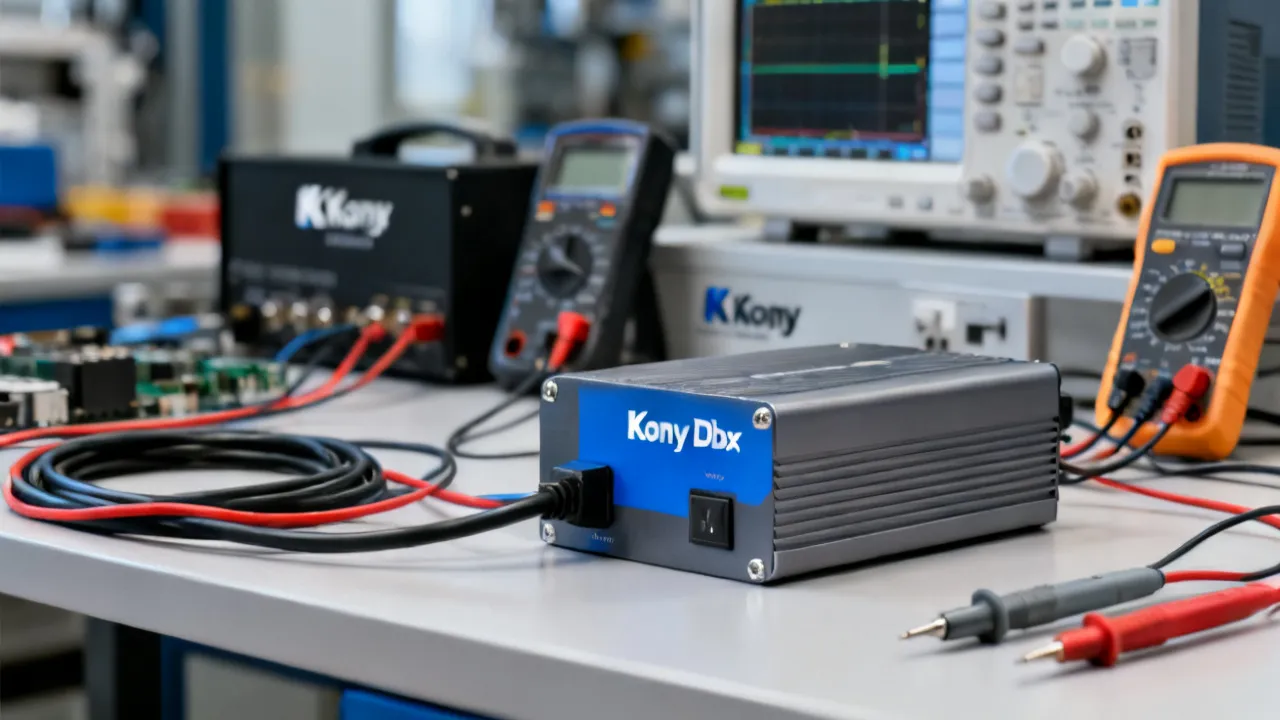
Key Takeaways for Choosing and Using Kony Dbx
If you are evaluating Kony Dbx for an electronics or industrial-control use case, your first priority should be compatibility verification: confirm the operating environment, input/output requirements, interfaces, and protection features before you decide on a supplier or a specific unit. In practical deployments, the “right” choice is less about marketing claims and more about aligning the device’s electrical behavior with the load, wiring, and protection strategy used at your site.
From an industry perspective, many failures in real installations are not caused by the concept of a device, but by mismatches—incorrect wiring topologies, insufficient insulation margins, incompatible signaling levels, or missing safety checks. This guide therefore focuses on selection logic, supplier due diligence, and operational readiness for Kony Dbx—including what you should ask and what you should document.
Because “Kony Dbx” may be used in procurement conversations to refer to more than one product variant or family, the most valuable mindset is to treat every decision as “model-specific” rather than “name-specific.” That means verifying the exact model number, revision, and datasheet alignment before you design a wiring harness, lock in fuses, or schedule installation.
What “Kony Dbx” Commonly Refers To in Technical Contexts
Because Kony Dbx can be referenced in different ways depending on vendor catalogs, integrator documentation, or system schematics, the very objective approach is to treat it as a device designation (or a product line name) that must be mapped to an exact model number and specification sheet. In industrial procurement, the label alone rarely determines performance; the decisive details are the unit’s rated electrical parameters (inputs, outputs, current/voltage limits), communication/trigger interfaces (if applicable), environmental ratings, and the protection circuitry (overcurrent, overvoltage, thermal behavior, and fault response).
When engineers say “choose the correct unit,” they typically mean: ensure the device behaves safely under the expected range of operating conditions, and that it integrates cleanly with the upstream power source and downstream load.
To avoid confusion, procurement teams often establish a “single source of truth” document that links every purchased part number to: (1) the quotation part number, (2) the datasheet revision, (3) the wiring diagram revision, (4) the bill of materials (BOM) line item, and (5) the expected manufacturing revision. For Kony Dbx, this becomes especially important when different product batches or revisions can alter connector pinouts, default settings, or protection thresholds.
In many organizations, “Kony Dbx” entries also appear during maintenance cycles as replacements. That creates a risk: replacement parts are sometimes ordered based on a partial match, especially if technicians see the same enclosure form factor or the same label style. A verification-first process prevents downtime caused by “functionally similar but electrically incompatible” substitutions.
How Engineers Evaluate Compatibility Before Purchase
For Kony Dbx, a compatibility-first evaluation usually follows a layered checklist:
- Electrical fit: match input voltage/current ranges and confirm output drive limits against the load’s requirements.
- Interface integrity: if the unit uses signaling or control lines, verify logic levels, impedance requirements, and connector pinouts.
- Protection and fault response: confirm what happens during abnormal conditions—short circuit, open circuit, startup inrush, brownouts, and transient events.
- Environmental robustness: verify operating temperature, humidity tolerance, vibration/impact assumptions, and expected condensation risk.
- Documentation clarity: ensure the supplier provides technical drawings, test conditions, wiring diagrams, and revision history for the exact model.
This is especially important when multiple SKUs exist under a shared umbrella name such as “DBX.” Without the exact model, it is easy to miscompare units that have similar appearances but different ratings.
To make this evaluation repeatable (and reduce human error), many teams define a “compatibility acceptance checklist” that must be signed off before purchase approval. That checklist often has four columns: required parameter, acceptable range, reference source (datasheet page number or standard), and internal evidence (calculation notes, wiring harness drawings, or test plan).
Compatibility is not only electrical and mechanical—compatibility is also behavioral. For example, if Kony Dbx includes current limiting, foldback protection, or specific shutdown/restart behavior, those behaviors must be acceptable to your system’s safety logic. A device that “survives” fault conditions might still create unacceptable outcomes such as repeated restart oscillation, nuisance tripping, or uncontrolled load behavior during brownout recovery.
Similarly, if the device has any configuration modes (hardware jumpers, DIP switches, software settings, or factory-programmed parameters), the correct configuration becomes part of compatibility. Compatibility verification should therefore include a confirmation that you will receive the correct configured variant, or that you have a documented procedure to set it correctly during commissioning.
Supplier Considerations: What a Reliable Kony Dbx Partner Can Provide
Supplier choice is not only about price. In professional procurement cycles, suppliers are vetted based on their ability to provide verifiable technical documentation, predictable lead times, and transparent handling of returns or rework. A strong supplier for Kony Dbx typically offers:
- Exact model traceability: the ability to confirm manufacturing batch/model revision.
- Specification documentation: datasheets, wiring diagrams, and compliance statements where applicable.
- Support during integration: guidance on installation steps, pinout checks, and commissioning.
- Quality assurances: documented testing practices (e.g., functional checks) aligned with industry norms.
Even when two offers seem similar, differences in labeling, packaging, and revision level can change how the unit must be wired or configured.
Beyond the basics, an excellent supplier partnership often includes a practical ability to answer engineering questions quickly and consistently. For example, when you ask, “Does this model tolerate capacitive load at startup?” you want not only a yes/no response, but a reference to a specification or a test note. When you ask, “What is the connector pinout for revision C?” you want them to provide the diagram revision and confirm that their current production matches it.
It is also useful to request: (1) incoming inspection recommendations, (2) recommended fuse or breaker guidance, and (3) any known installation issues (for example, polarity marking inconsistencies in certain packaging runs or sensitivity to cable shielding). Suppliers who provide this information early help prevent expensive rework.
In regulated or high-integrity environments, suppliers may need to provide certifications or compliance statements tied to specific standards. While you should always confirm the applicable requirements for your region, good vendors can clearly identify what they have tested and what it covers.
Supplier due diligence also includes verifying return policy terms and replacement lead times. If Kony Dbx is needed for a critical project timeline, you want to ensure that if the unit fails commissioning, the supplier can provide replacement quickly and handle shipping and documentation without friction.
Price and Cost Factors for Kony Dbx (How to Think Objectively)
You asked for “price information,” but no specific numbers were provided. In such cases, the very objective approach is to explain how price typically forms for a Kony Dbx-type device and what drives variation. In industrial electronics, cost differences are commonly linked to:
- Rated performance: higher current/voltage margins, stronger protection, or expanded temperature range can raise cost.
- Build quality and components: shielding, thermal design, PCB grade, connectors, and enclosure material matter.
- Compliance/testing scope: documented quality checks and certifications (where required) affect pricing.
- Warranty and support: extended coverage or integration help can add cost but reduce risk.
To manage procurement risk, treat price as a variable inside a larger evaluation framework. If a quotation is dramatically lower than comparable models, it should trigger additional verification of ratings, revisions, and documentation—rather than immediate acceptance.
From a total-cost-of-ownership (TCO) viewpoint, the cheapest unit can be the most expensive if it increases downtime. For instance, a mismatch in protective behavior might cause repeated failures, which then leads to extended commissioning, maintenance labor, and potential collateral damage. Therefore, engineering and procurement teams often use an “equivalent risk” model: price is assessed alongside risk to schedule and risk of late-stage integration issues.
Practical cost considerations also include:
- Wiring harness and labor: if the unit requires a unique connector or non-standard cable termination, the cost may shift from the unit price to installation cost.
- Spare parts strategy: having the wrong variant increases spare complexity. Sometimes a slightly more expensive part reduces spare stocking confusion.
- Shipping and lead time: expedited shipping may outweigh the unit price difference, particularly when the project cannot absorb delays.
- Testing overhead: if documentation is incomplete, your team may need to perform additional bench tests before deployment, which costs engineering time.
Because costs are highly project-specific, the “best” way to interpret a price quote is to demand the technical equivalence evidence before concluding that units are interchangeable. If you are given only a price without full datasheet alignment, you should assume hidden differences until proven otherwise.
When multiple suppliers are bidding, it can help to request a standardized quote package: exact model number with revision, datasheet revision, wiring diagram revision, warranty terms, lead time, and any relevant compliance documentation. Then your engineering team can compare technical content, not only the unit price.
Operational Readiness: Commissioning and Safe Startup Practices
From an expert operations standpoint, the very valuable work is often done before the unit is connected to production loads. For Kony Dbx, commissioning should include:
- Pre-install inspection: verify physical condition, connector integrity, and label/model matching against paperwork.
- Wiring verification: check pinouts, polarity, grounding strategy, and cable ratings.
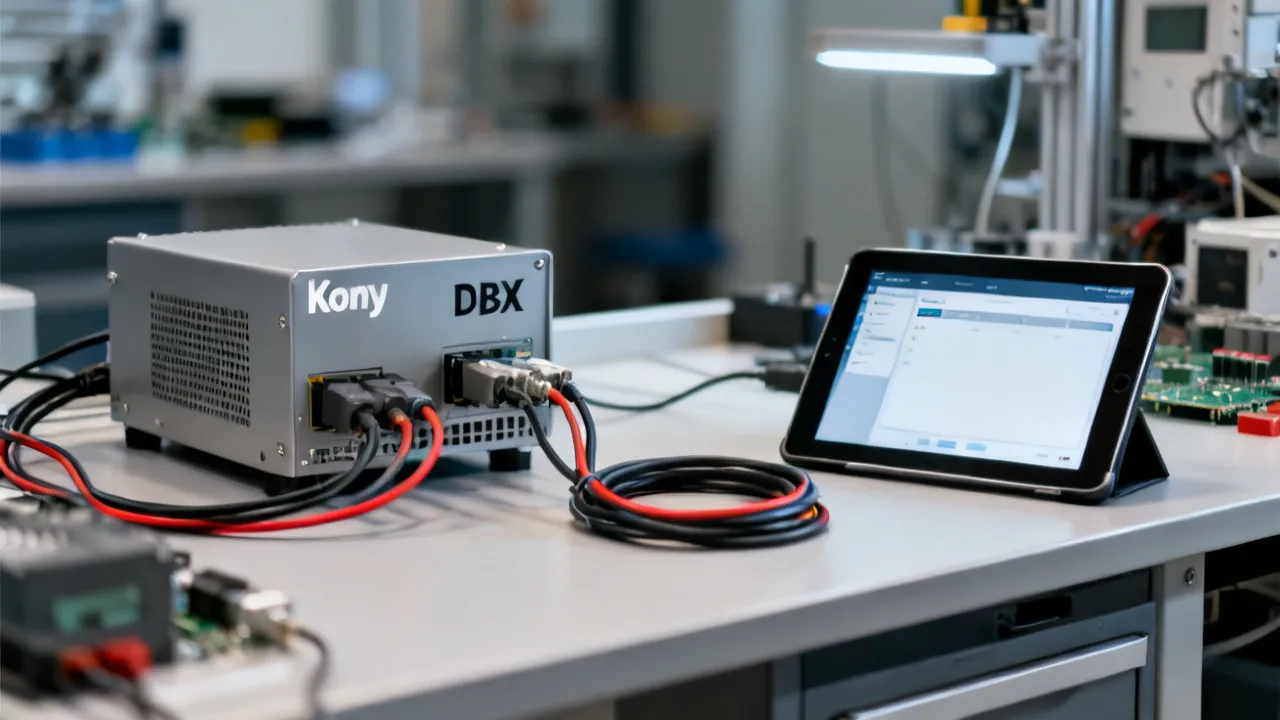
- Bench test (when feasible): confirm baseline behavior under controlled conditions before field installation.
- Controlled power-up: use appropriate protections (fuses/breakers), observe startup transient behavior, and confirm expected output/state.
- Fault simulation within limits: validate safe response to abnormal conditions only if permitted by your safety procedure and vendor guidance.
These steps reduce the probability of hidden faults that might otherwise appear later as intermittent performance issues or premature component aging.
Operational readiness is also about defining acceptance criteria. A commissioning plan should specify measurable outcomes: expected output voltage/current ranges, expected state transitions, allowable ripple/noise behavior, and allowed time-to-start. Without measurable criteria, commissioning becomes subjective and can lead to “passing” a unit that only barely meets the expected behavior.
When planning controlled power-up, it is helpful to include:
- Instrumentation: use appropriate meters or oscilloscopes for the parameters that matter (for example, input transient stability or output ripple).
- Current-limited power sources: if safe and feasible, use current-limited supplies or protective test rigs to prevent catastrophic faults during wiring errors.
- Thermal monitoring: measure surface temperature or use thermal imaging if the unit is expected to dissipate significant heat.
- Safety interlocks: ensure that test setups comply with your site safety policies and do not defeat protective devices.
For fault simulation, a cautious approach is essential. Even when vendors describe protection behaviors, you should not assume that any fault response is acceptable in your system context. For example, a unit might enter a fault latch state that must be cleared by a power cycle. If your system cannot safely power-cycle under certain conditions, then the fault response becomes a system-level risk. Therefore, fault simulation should be performed with a clear understanding of system constraints and your safety procedure.
Also consider lifecycle operational factors: if Kony Dbx operates in a cabinet with airflow limits, filter maintenance schedules, or seasonal temperature variation, those conditions affect reliability. Commissioning should therefore document the environmental setup (airflow path, cabinet heat load, ambient temperature measurement location) so future troubleshooting can replicate the installation context.
Performance and Reliability: What to Verify in Documentation
When assessing Kony Dbx, reliability is rarely proven by a slogan; it is supported by test conditions and measured outcomes. Look for documentation that clarifies:
- Thermal characteristics: maximum operating temperature and how performance changes with heat.
- Transient tolerance: behavior during power interruptions, inrush currents, or short disturbances.
- Electrical noise considerations: susceptibility/emissions statements if the unit is integrated into sensitive equipment.
- Load compatibility: recommended load type (resistive/inductive/capacitive), derating guidance, or output ripple behavior if applicable.
If such details are missing, treat the unit as “unqualified for your use case” until an engineering validation plan is completed.
In practice, reliability verification is multi-dimensional. A unit can meet electrical performance in a lab but fail in the field because of thermal cycling, vibration, condensation, or cable routing that introduces intermittent contact or electromagnetic interference (EMI). That is why documentation should be treated as a baseline, and your validation plan should address the environment where the device will live.
To strengthen your reliability assessment, verify the following additional areas in the documentation or via vendor clarification:
- Derating curves: if the unit has current or power derating depending on ambient temperature or enclosure size, confirm you will operate within the derated envelope.
- Input undervoltage and dropout behavior: define how the device behaves when the supply dips or ramps down.
- Output response to load changes: step-load response, overshoot, undershoot, and recovery time are often critical in control systems.
- Isolation ratings: if isolation is provided, confirm insulation coordination, dielectric strength, creepage/clearance data, and whether pollution degree assumptions apply.
- EMC considerations: identify recommended installation practices such as grounding scheme, shielding, and cable separation rules.
- Life expectancy indicators: some vendors provide MTBF estimates or component life models, but these must be interpreted carefully.
Even when a vendor provides limited details, you can often mitigate risk by adding a structured validation plan. For example, you can test under worst-case ambient temperatures, verify behavior during supply dips, and validate performance with representative loads (including the most challenging inductive or capacitive loads you expect in the field).
Reliability also benefits from documenting the “assumed conditions” explicitly. Many failures occur when real-world conditions differ from what was assumed during integration. Examples include a cable longer than the recommended limit, a ground reference that is not the same as the test setup, or a load with a different startup surge than the one used during qualification.
Comparison Table, Source Notes, and Step-by-Step Requirements (Supplement)
Below is a supplement section that helps you structure decisions around Kony Dbx. The comparison is written to support procurement and engineering alignment, not to claim superiority of one vendor over another.
| Evaluation Category | What to Compare for Kony Dbx | What “Good” Looks Like |
|---|---|---|
| Model traceability | Exact model number, revision, and manufacturing batch references tied to your paperwork | Clear matching between quotation, label, and provided datasheet for the same revision |
| Specification clarity | Input/output ratings, interfaces, wiring diagrams, and any derating rules | Complete datasheet with test conditions and safe operating limits |
| Protection behavior | How the unit responds to overcurrent, short circuit, overvoltage, thermal stress, or undervoltage | Defined fault response and recovery behavior that aligns with your safety procedure |
| Environmental suitability | Temperature/humidity/vibration assumptions and enclosure ratings | Documented operating range matching your site conditions |
| Integration support | Commissioning guidance, interface pinouts, troubleshooting notes | Vendor or integrator provides practical setup steps and known issues list |
| Quality assurance | Testing and inspection processes (functional checks, incoming inspection guidance) | Reasonable QA documentation and consistent supply handling |
Sources (for standards and objective procurement concepts): In professional practice, the evaluation approach aligns with generally accepted safety and documentation principles used in industrial electronics procurement. For foundational concepts, many organizations reference standards guidance from bodies such as IEC and ISO, and vendor compliance claims should be checked against applicable regulations in your region. When assessing electrical safety and documentation expectations, consult the relevant IEC standards for your equipment class and your local regulatory requirements.
Step-by-Step Guide (Engineering-oriented commissioning flow):
- Confirm the exact Kony Dbx model: match the model number on the unit to the datasheet and quotation.
- Define the load and operating envelope: list maximum/minimum input conditions and load characteristics.
- Verify interface wiring: cross-check connector pinouts, polarity, grounding, and cable ratings.
- Plan protections: determine fusing/breaker sizing, grounding method, and safe startup approach.
- Run controlled startup: power up with instrumentation and verify expected states/outputs.
- Validate fault response: only if permitted by your safety procedure and vendor guidance.
- Document results: record measurements, environmental conditions, and firmware/config settings if relevant.
Conditions/Requirements you should not skip: Use correct safety-rated components, follow vendor installation instructions, and ensure your integration team has access to the exact datasheet revision for Kony Dbx. If the installation environment includes harsh dust, moisture, or vibration, confirm enclosure suitability and mounting approach.
To make commissioning stronger, teams often add two additional layers beyond the core checklist: (1) a pre-handoff verification step and (2) a post-install monitoring period. Pre-handoff verification ensures all test results are captured and that wiring, labeling, and configuration are consistent with the system design. Post-install monitoring can involve logging key measurements for a few days or weeks to confirm stable behavior under real operating patterns.
In addition, it helps to define a “troubleshooting map” before problems occur. That map links symptoms (no output, intermittent output, overtemperature warnings, fault latch) to likely causes (wiring mismatch, connector looseness, wrong load type, grounding issue, supply instability) and to the exact tests you will perform to confirm each cause.
Real-World Use Cases: Where Kony Dbx Fits
Without claiming a specific function for every “Kony Dbx” listing, engineers commonly encounter device categories under “DBX”-like names in system designs where control, conversion, distribution, or protection functions are required. In practice, Kony Dbx might appear in:
- Industrial control cabinets: integration into power distribution or control subsystems.
- Process or automation equipment: parts of control chains where stable electrical behavior matters.
- Maintenance and replacement projects: where correct model revision matching is essential to avoid downtime.
For each scenario, the guiding principle is the same: confirm electrical and interface compatibility, then validate safe operation through commissioning checks.
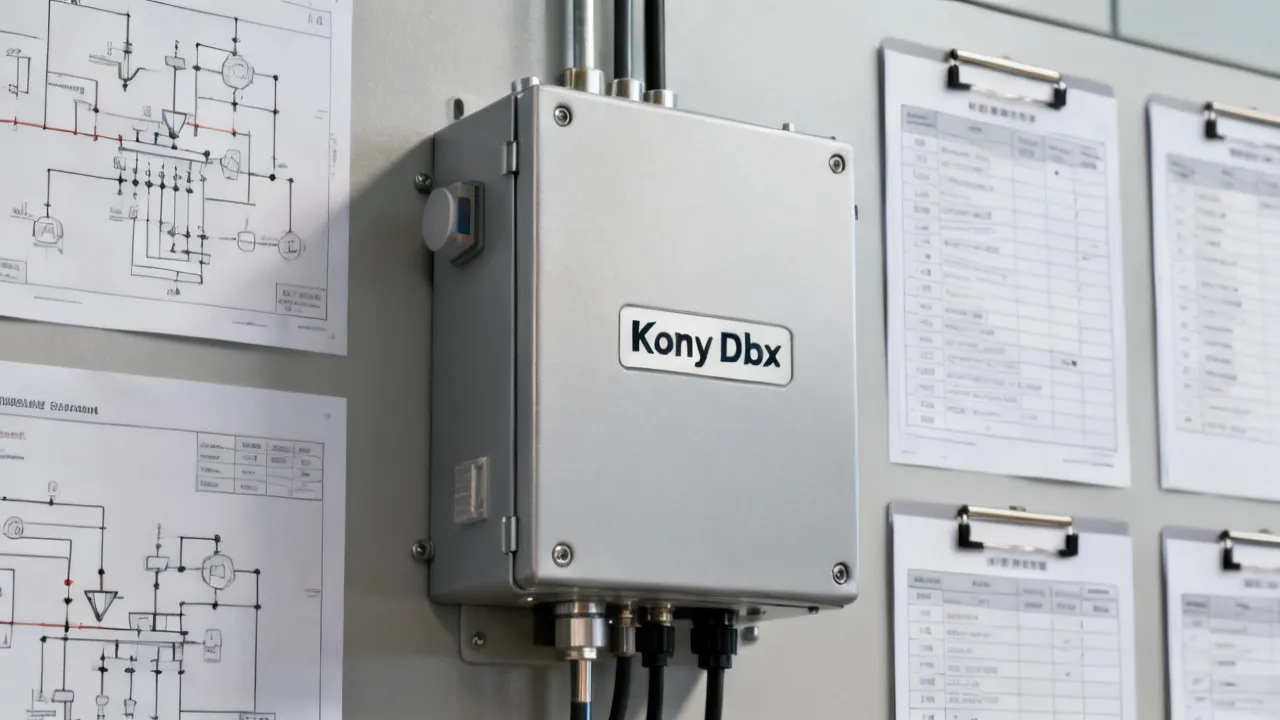
Industrial cabinets provide a particularly revealing case study for why documentation and wiring verification matter. Cabinets often combine multiple components with different isolation requirements, noise sensitivities, and grounding needs. If Kony Dbx is integrated into such an ecosystem, the device’s performance may depend heavily on how grounding is implemented, how cables are routed, and whether shielding is properly connected at the recommended termination points.
In process automation, devices like Kony Dbx may be expected to function reliably despite frequent start/stop cycles, supply dips, and load changes. If a unit’s fault response causes an output to shut down and require a manual reset, this behavior could disrupt process continuity. Therefore, in such environments, engineers should explicitly test for response to representative disturbances and document how recovery occurs.
In maintenance and replacement contexts, the key risk is the assumption that two “similar” models are interchangeable. Even a small difference in rated input range, output type, or connector pinouts can cause problems. For replacements, a best practice is to compare the old unit’s label and any available datasheet with the new unit’s datasheet. If the old unit is not available for reference, you should extract evidence from the existing wiring harness and cabinet documentation.
Industry Expert Insights: Avoiding Common Procurement and Integration Mistakes
In day-to-day engineering and purchasing workflows, the following mistakes recur when teams buy or replace devices like Kony Dbx:
- Over-reliance on naming: purchasing by a partial label instead of the exact model/datasheet revision.
- Assuming electrical equivalence: different ratings or protection thresholds can break compatibility.
- Neglecting installation details: grounding, cable routing, and connector seating often determine real reliability.
- Skipping documentation review: missing wiring diagrams can result in reversed polarity, swapped signal lines, or unsafe configurations.
When teams correct these areas early, the project timeline typically improves because fewer “unknowns” remain during integration.
Additional expert-level mistakes worth avoiding include:
- Not aligning fusing strategy to device behavior: if the device has specific current limiting, the fuse selection must still support safe interruption of worst-case faults.
- Ignoring startup and inrush requirements: a power supply that is stable in steady-state may not behave predictably during startup transients.
- Not validating load type: inductive and capacitive loads can trigger overshoot, ripple, or protection events even if steady-state current is within range.
- Underestimating cable length effects: voltage drop, EMI coupling, and signal integrity degradation can shift performance outside expected boundaries.
- Failing to check enclosure mounting and heat dissipation: thermal resistance between the unit and enclosure can alter behavior compared to datasheet test conditions.
These mistakes can be prevented by tightening the workflow between engineering and procurement: procurement should not release a purchase order without the exact part number and revision; engineering should not finalize wiring and protection calculations without the corresponding datasheet and wiring diagram. When those steps are aligned, the overall risk drops sharply.
FAQs about Kony Dbx
1) What information do I need to choose the right Kony Dbx model?
You should identify the exact model number and gather key parameters from your system: input voltage/current range, expected load type, wiring/interface requirements, operating temperature range, and any relevant protection/safety needs. Then compare those items against the Kony Dbx specification sheet revision provided by the supplier.
In addition, it is often useful to record the “assumed worst case” conditions for your site—like maximum ambient temperature, minimum supply voltage during brownouts, and the maximum load surge at startup. Those assumptions should be captured in your design notes and tied back to the datasheet test conditions.
2) How can I confirm supplier accuracy for Kony Dbx?
Ask for documentation that matches the exact model revision: datasheets, wiring diagrams, and identification details that correspond to the unit label. During receipt, verify the label against the purchase order and test the unit under a controlled commissioning plan before connecting to critical loads.
To confirm beyond paperwork, consider performing an incoming inspection that includes basic checks: connector pin mapping verification (if accessible), visual inspection of markings, and a functional test under a safe dummy load. Document the results so that if issues arise later, you can determine whether the problem existed at arrival or developed after installation.
3) Does price alone determine which Kony Dbx unit is top?
No. Price is only one factor. A lower-cost unit can be appropriate only if its ratings, protections, and environmental suitability match your requirements. In many engineering projects, the total risk and integration time cost matters more than the purchase price.
When evaluating cost, consider not only acquisition price but also time costs: time spent troubleshooting, reworking wiring harnesses, scheduling downtime, and updating documentation. Those hidden costs often dominate the purchase-price difference.
4) What are the main risks during installation?
The very common risks are wiring mistakes (pinouts/polarity), incompatible electrical ranges, insufficient protection, and improper grounding or mounting that leads to thermal or noise-related instability.
Installation risks also include documentation drift—cases where the wiring diagram revision used by the technician differs from the one used in the design. Version control is therefore important. If possible, technicians should work from controlled drawings with revision numbers visible, and the cabinet label should match those revisions.
5) Can Kony Dbx units be used interchangeably?
Not safely assumed. Even if two items share a similar name, they can have different electrical ratings, interface behavior, or fault-response characteristics. Interchangeability must be confirmed using the exact datasheet specifications and vendor guidance.
If interchangeability is being considered due to supply chain constraints, you should conduct an engineering validation. At minimum, verify: input/output ratings, connector pinouts, isolation ratings, protection behavior, and startup/fault recovery behavior. Where relevant, validate EMC and noise susceptibility. Do not rely solely on functional similarity.
6) What should be documented after commissioning?
Record measured startup behavior (where applicable), output states, fault-test results if permitted, environmental conditions, wiring verification notes, and—if relevant—any configuration settings. Keep these records for maintenance, audits, and future replacements.
Also capture the testing setup: instrument models, measurement points, ambient temperature during testing, and load conditions. That information will make troubleshooting later much faster and more accurate, especially if field symptoms differ from lab expectations.
7) Are there any compliance or safety checks I should consider?
Yes. Electrical and safety compliance depends on your region and equipment class. Verify that the Kony Dbx documentation aligns with your applicable standards and internal safety procedures. If required, consult a qualified engineer or compliance specialist.
Compliance considerations may include ensuring proper isolation coordination, correct protective earth grounding, correct labeling, and adherence to installation practices described by the manufacturer. If your system is subject to certification testing (for example, EMC or safety certification), ensure that the supplier’s guidance is aligned with how the equipment will be installed and tested.
Conclusion: A Practical, Verification-First Approach to Kony Dbx
The strongest way to evaluate Kony Dbx is to treat it as an engineered component that must be matched through verification—not guesswork. Confirm the exact model and revision, assess electrical and environmental compatibility, select suppliers who provide complete technical documentation, and follow a commissioning process designed to prevent wiring and operating mismatches. When you do this systematically, you reduce integration friction and improve reliability outcomes across the lifecycle of the system.
In a well-run engineering environment, “choosing Kony Dbx” is not a single decision—it is a chain of decisions that start at procurement and end at documented commissioning results. When every link in that chain is strong, the device’s behavior in the field is predictable, and maintenance becomes simpler because replacements can be ordered with confidence and installed with the correct assumptions.