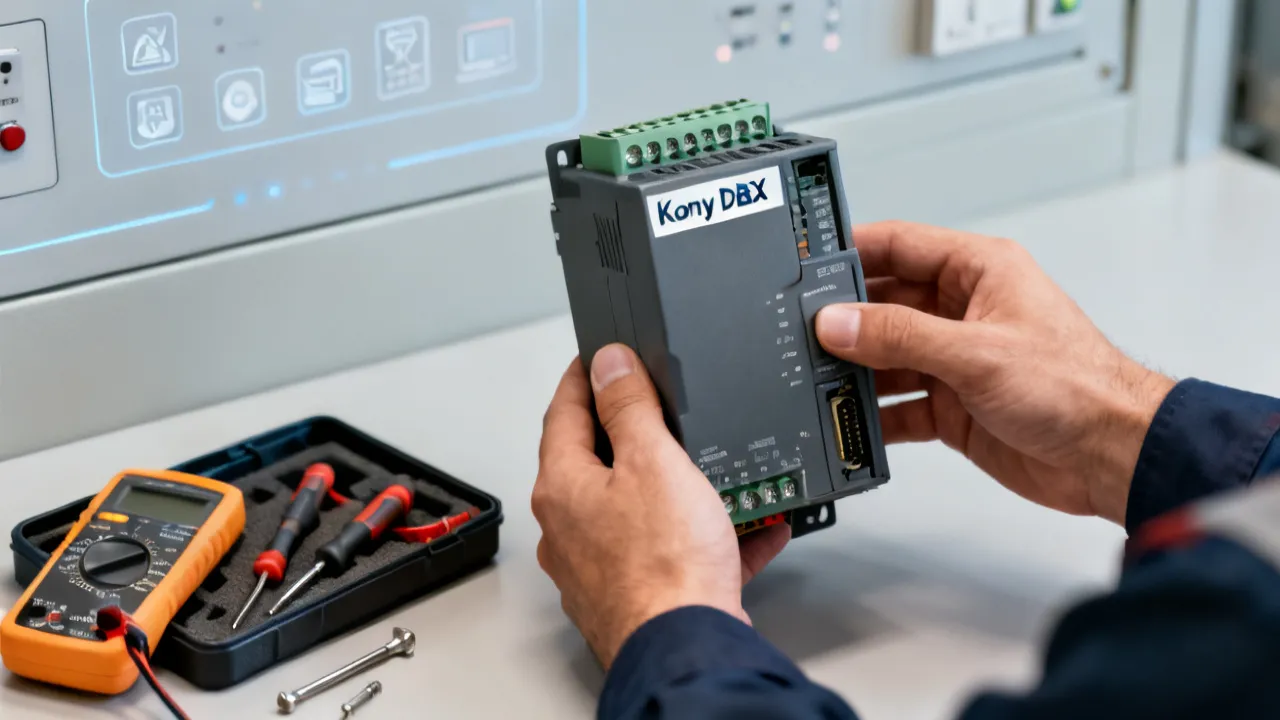
Kony DBX: Technical Overview and Expert Evaluation
This guide explains Kony Dbx in practical, objective terms for teams evaluating integration, performance, and operational fit. Background context covers what “DBX” typically implies in industrial/software workflows, common selection criteria, and how vendors’ documentation and service terms should shape purchasing decisions—without relying on assumptions or marketing claims.

Key takeaways on Kony Dbx and selection priorities
Kony Dbx is best assessed through a disciplined, evidence-based evaluation rather than a single feature list. Professionals typically focus on compatibility with existing architecture, operational risk (including failure modes and recovery behavior), maintainability (configuration lifecycle, upgrade/patch impact, and runbook maturity), and documented performance evidence that aligns with your actual workload. In other words, the right approach is not “which vendor sounds best,” but “which system demonstrably fits your constraints and responsibilities.”
When comparing Kony Dbx against other options, the reliable method is to map your workflow requirements to the vendor’s stated capabilities, confirm integration boundaries, and verify support responsibilities before committing resources. This includes understanding what happens during incident response, who owns which layers of the stack, and how quickly the supplier can help when production conditions deviate from expected states.
Where price, supplier terms, and deployment constraints remain unclear, the decision should pause until requirements, acceptance criteria, and service coverage are explicitly documented. Avoid treating incomplete procurement packages as “good enough,” because the cost of ambiguity shows up later as rework, extended pilots, or stalled releases.
What Kony Dbx means in real-world evaluation
In many engineering and enterprise contexts, abbreviations like “DBX” appear as shorthand tied to a product line, a component family, or an implementation label inside a broader platform. As a result, the term “Kony Dbx” should be treated as a specific system or configuration name that may reference:
- A particular deployment module within a larger stack (for example, an edge integration layer, an application runtime component, or a network-facing service)
- A data exchange or processing component used in automation workflows (for example, transformation, normalization, routing, or message mediation)
- A device/interface family with defined protocols and service behaviors (for example, specific adapters, gateways, or connectors)
Because naming conventions vary by vendor, documentation practices, and region, an expert evaluation should begin with the authoritative documentation associated with the exact model or SKU you intend to purchase. “Kony Dbx” alone is rarely sufficient as a technical identifier. Instead, evaluation must anchor to the exact artifact: SKU, version, deployment topology, licensing model, and any required dependencies.
In real-world procurement, misunderstandings often occur when stakeholders assume that two similarly named components behave the same way. Even small differences—such as runtime version, connector type, supported authentication method, or message schema conventions—can materially affect integration success, security posture, and operational burden.
Therefore, a professional evaluation workflow typically starts with a “definition capture” phase:
- Collect the vendor’s exact technical specification and architecture diagram for the specific Kony Dbx SKU
- Confirm what components are included versus what is assumed (for example, whether integration tooling, logging, or monitoring is bundled)
- Validate compatibility requirements (network, database, runtime, supported operating systems, container requirements, and whether dependencies must be managed by you)
- Establish version constraints and upgrade expectations (what versions are supported, and what changes between releases)
Why professionals should separate “capability” from “fitness”
It’s common for teams to focus on headline features—especially when timelines are tight. But operational environments reward a different question: fitness-for-use. Fitness means the system behaves predictably under your constraints (data quality, concurrency, network conditions, security posture, maintenance window limits, escalation paths, and operational staffing levels).
For Kony Dbx, treat capability as a set of documented behaviors. Fitness is what happens when those behaviors are exercised against your real workflows. This distinction matters because a system can be “capable” in a demo while still failing in production due to edge-case data, unusual timing relationships, partial outages, or misaligned ownership boundaries.
Responsible procurement and engineering teams handle this by establishing acceptance criteria, integration test plans, and ownership for incident response before deployment. They also build an evaluation strategy that distinguishes:
- Correctness: Does it produce the right outputs for expected and unexpected inputs?
- Resilience: Does it fail safely, recover gracefully, and avoid creating cascading outages?
- Performance consistency: Does it maintain throughput/latency within acceptable bounds under realistic load profiles?
- Operability: Can operations teams diagnose and resolve issues without guesswork?
- Maintainability: Can you evolve it over time without accumulating unmanageable maintenance debt?
When capability and fitness are conflated, organizations often overpay for features they don’t need while underinvesting in what truly determines outcomes: integration correctness, operational visibility, and sustainable change management.
Integration considerations: where very deployments succeed or fail
An industry expert’s perspective usually highlights integration as the deciding factor. Even when a solution can technically connect to other systems, success depends on details that often get lost in high-level statements. For Kony Dbx, integration success depends on your ability to validate and enforce contracts across upstream and downstream boundaries.
Even if the vendor provides integration connectors, you still need clarity on the following:
- Interface contracts: Are APIs, message schemas, configuration formats, and event semantics explicitly documented? Do they include versioning rules and backward compatibility behavior?
- Data governance: How are data mappings validated and audited? Are there mapping validation tools, schema enforcement options, or change tracking for transformations?
- Throughput and latency behavior: What do vendor documents say about scaling characteristics? Does the solution degrade linearly or nonlinearly under load? What is the impact of payload size and concurrency?
- Error handling: Are retries, timeouts, circuit-breaking behavior, and failure modes defined? What happens when downstream systems return partial errors or invalid payloads?
- Observability: Are logs, metrics, and traceability available in a way your operations team can use? Are correlation IDs consistent across hops? Are failures detectable and diagnosable?
When these aspects are missing or only described informally, project risk increases significantly. A robust vendor typically provides not only diagrams but also practical artifacts: sample payloads, test tools, reference configurations, and operational guidance that explains how to interpret real logs and metrics during incidents.
Professional integration assessment goes beyond “it connects” by verifying contract alignment and failure choreography. For example:
- Contract alignment: confirm that your field naming conventions, data types, character encoding, schema evolution rules, and required/optional semantics match what the vendor expects
- Failure choreography: confirm how the system behaves when upstream systems send malformed messages, when network connectivity degrades, or when downstream services time out
- Idempotency: confirm whether repeated messages cause duplication or safe reprocessing, and how you can control deduplication
- Ordering guarantees: confirm whether the solution preserves ordering where needed, and how it behaves when ordering breaks
- Backpressure and flow control: confirm what happens under load spikes—does it buffer, reject, slow down, or lose data?
In many deployments, the most expensive surprises come from “integration edge cases”: data values that don’t fit constraints, timeouts under specific network conditions, or mismatched expectations about retry behavior that results in duplicate actions.
Operational maintainability: the often-overlooked ROI driver
Beyond initial deployment, maintainability determines good cost. Even when a system meets functional requirements, teams can still face high long-term costs due to operational friction: frequent manual interventions, brittle configuration changes, unclear upgrade procedures, or insufficient role separation.
For systems labeled as Kony Dbx, you should evaluate:
- Configuration lifecycle: How are changes reviewed, versioned, and rolled back? Is configuration treated as code, with pull request workflows and audit trails? Are changes reversible without data loss?
- Upgrade path: What happens during patches or major revisions—are migrations required? What is the downtime expectation? What regression testing should you plan?
- Role-based access: Can responsibilities be separated between operators and administrators? Are least-privilege roles available? Can you audit who changed what and when?
- Runbooks and incident handling: Does the supplier provide operational procedures or does your team create them from scratch? Are there documented playbooks for common failure scenarios?
This lens helps prevent hidden “maintenance debt,” where teams spend more time managing exceptions than delivering outcomes. Maintainability also impacts security because operational work often includes manual steps. Manual steps can increase human error, reduce consistency, and complicate compliance evidence collection.
To evaluate maintainability, a professional approach includes asking for artifacts that reflect day-2 operations:
- Admin guide that describes configuration structure and safe change methods
- Release notes that explain breaking changes, migration steps, and compatibility constraints
- Known issues and recommended mitigations
- Operational dashboards or sample monitoring views
- Example runbooks for troubleshooting and incident escalation
It’s also worth checking whether the platform supports safe operational patterns such as canary releases, feature toggles, or staged configuration rollouts. These patterns reduce risk by preventing a single misconfiguration from impacting all workflows at once.
Pricing and supplier diligence (how to compare without guessing)
The request you provided does not include specific price figures, currency, or supplier names. In such cases, top practice is to request a structured quote and compare on comparable terms rather than comparing single-line numbers. If you only compare “annual cost” without context, you risk selecting a plan that appears cheaper but imposes significantly higher operational or implementation costs.
When obtaining a quote for Kony Dbx, ask the supplier to itemize:
- Licensing or subscription model (per unit, per environment, per user, per integration endpoint, or per throughput tier)
- Implementation services scope (configuration, integration, testing support, and any required discovery activities)
- Training (how many sessions, materials provided, who attends, and whether training covers troubleshooting and day-2 operations)
- Support coverage (response times, escalation rules, hours of operation, and severity definitions)
- Included documentation (API references, admin guides, test artifacts, architecture diagrams)
- Any mandatory prerequisites (hardware sizing, network prerequisites, database components, identity provider requirements)
In professional procurement, clarity is itself a deliverable. For example, if the quote includes “integration support,” you should clarify whether that support includes writing custom adapters, building test harnesses, or only assisting with configuration and guidance.
Also ensure you compare total cost of ownership (TCO) rather than only license fees. For Kony Dbx, TCO can be affected by:
- Environment count (dev/test/prod, staging for releases, disaster recovery environments)
- Monitoring tooling and whether it’s built-in or requires integration with your existing observability stack
- Support model (standard support vs premium, on-site requirements, or named contacts)
- Upgrade and maintenance activities (migration steps, regression testing requirements)
- Engineering time for custom integration behaviors and ongoing changes
By forcing the quote to be transparent, your organization reduces decision ambiguity and supports internal approval processes. It also helps you align expectations between procurement and engineering teams so neither side discovers surprises after purchase.
Risk and compliance checklist for Kony Dbx evaluations
Even without discussing sensitive or speculative claims, compliance and risk assessment are standard in professional environments. You should confirm that the supplier can support your governance needs, including security posture, data handling practices, change management discipline, and operational continuity planning.
While specific requirements vary by industry and region, the following checklist is a practical starting point:
- Security posture: authentication/authorization mechanisms (SAML/OIDC/LDAP support where applicable), encryption expectations (in transit and at rest), and the supplier’s vulnerability disclosure process
- Data handling: retention policies, audit logging availability, access controls (including separation of duties), and any support for data masking or redaction
- Change management: how updates are communicated and deployed, whether there is a documented release process, and how breaking changes are handled
- Operational continuity: what happens when dependencies fail (and how you detect it), and whether the system supports safe retries or circuit breaker patterns
Where applicable, align these checks with frameworks like ISO/IEC 27001 for security management and NIST guidance for software security and risk management. Using recognized frameworks makes your evaluation more defensible to internal audit teams and helps ensure you don’t miss critical control areas simply because they weren’t emphasized in product documentation.
In addition to the checklist, professionals often request evidence artifacts rather than verbal assurances. Evidence might include:
- Security architecture overview
- Pen-test summary reports or vulnerability management program evidence
- System hardening guidance
- Access control documentation and sample audit logs
- Change logs and versioning policies
When evidence is limited, you can still proceed—but you should adjust risk posture accordingly: tighten pilot scope, strengthen monitoring, and require additional review steps before scaling up.
Industry context: how “DBX” style components are typically used
Across enterprise and industrial software, modules that resemble “DBX” labels often appear as part of a larger integration or data exchange strategy. Typically, such components help normalize, route, and transform information between systems that may have different models, schemas, and operational expectations.
Common usage patterns include:
- Database interchange layers that normalize data formats across systems (for example, converting schema structures, mapping identifiers, and enforcing data constraints)
- Bridging components that coordinate reads/writes between services (for example, orchestrating workflow steps where state changes must be consistent)
- Middleware interfaces that support event-driven workflows (for example, handling messages, deduplicating events, and ensuring safe processing semantics)
However, the only dependable conclusion is the vendor’s own technical specification for the exact Kony Dbx item you are considering. Generic descriptions should be treated as preliminary leads, not as final truth.
When you evaluate Kony Dbx within an industry context, a useful approach is to identify where it sits in your end-to-end flow. For example, ask:
- Is Kony Dbx a primary orchestration point or a supporting integration layer?
- Does it own state or operate statelessly? If it owns state, what storage and lifecycle does it use?
- Is it synchronous or asynchronous? How does it handle eventual consistency?
- Does it mediate data quality by validating input schemas and enforcing constraints?
These questions help prevent a common misconception: assuming that a component’s label (or marketing story) reflects actual runtime behavior. Runtime behavior is what determines reliability, compliance evidence generation, and operational load.
Expert-driven test approach before purchasing
To evaluate Kony Dbx responsibly, perform tests that mimic your production behavior patterns. The goal is not merely “it works,” but “it works safely and measurably.” A solid test approach often includes functional validation, resilience testing, performance profiling, observability verification, and security review.
Even when a vendor offers a pilot, your organization should treat the pilot as a structured experiment with measurable criteria. Without criteria, pilots become expensive demos that do not inform decision-making under operational risk.
A mature test plan frequently includes the following categories:
- Functional validation: verify correctness of data mapping, transformations, routing rules, and outputs. Include realistic datasets, not only contrived test values. Validate that required fields, data types, and business rules are correctly enforced.
- Resilience testing: simulate timeouts, retries, partial failures, dependency outages, network interruptions, and intermittent malformed inputs. Confirm the system’s behavior for both transient and permanent errors.
- Performance profiling: measure throughput and latency under realistic load profiles. Define load based on production patterns: concurrency levels, payload sizes, message frequency, and burst behavior.
- Observability verification: confirm logs/metrics cover the events your team needs to troubleshoot. Validate that correlation identifiers, error classifications, and timestamps are present and useful.
- Security review: test access controls, permission boundaries, authentication integration, audit trails, and encryption-related assumptions. Verify that unauthorized requests are blocked and that logs do not leak sensitive data.
For performance-related claims, rely on documented results from official vendor materials or third-party evaluations when available. But also recognize that vendor benchmarks are rarely identical to your environment. Use vendor numbers as starting points, then validate with your own tests to establish confidence.
When testing, professionals also define what “good” looks like for failure behavior. For example, you may specify:
- Maximum acceptable retry attempts before failure classification
- Maximum time-to-detect (MTTD) for common error types
- Recovery time objectives (RTO) for dependency failures
- Maximum acceptable duplicate action rate under retry scenarios
- Accuracy requirements for transformed data fields under edge-case inputs
This turns performance and reliability from vague assertions into measurable outcomes. It also reduces disagreements later about whether a failure was “within tolerance.”
Comparison table of implementation options and requirements
The table below offers a structured comparison of common implementation pathways for systems in the Kony Dbx category. It is phrased as a decision aid (not as an endorsement of any single vendor approach). Replace “Kony Dbx” with your specific SKU documentation where applicable.
| Evaluation dimension | Option A: Standard integration | Option B: Custom integration | Option C: Phased rollout |
|---|---|---|---|
| Primary goal | Deploy using documented interfaces | Optimize mappings/workflows beyond defaults | Reduce risk by introducing scope incrementally |
| Typical inputs needed | Vendor specs, sample payloads, config templates | Extended mapping rules, engineering resources, acceptance tests | Use-case prioritization, environment readiness plan |
| Requirements clarity | Lower ambiguity if interfaces are fully documented | High clarity needed for custom behavior and edge cases | Clear stage gates and rollback criteria are required |
| Change management | Veryly configuration-level updates | Includes code/config extensions and version coordination | Requires disciplined release planning |
| Operational risk | Moderate; depends on data quality | Potentially higher if requirements are incomplete | Lower per stage if acceptance gates are enforced |
| Top fit when | Your workflows match vendor-supported patterns | You have unique workflows but can invest in testing | You need continuity and cannot tolerate large cutover risk |
To use the table effectively, teams often add an extra dimension that isn’t always shown: organizational readiness. For example, even if Option B (custom integration) appears necessary, the organization must confirm it has the engineering capacity to maintain it, the security review capacity to approve custom code or configurations, and the operations capacity to monitor and troubleshoot it.
Source guidance and evidence standards (professional due diligence)
To keep evaluations objective, use evidence standards rooted in widely used governance practices. For security and risk management, organizations often align with ISO/IEC 27001 and related NIST guidance (e.g., NIST SP 800 series). For performance and reliability engineering, teams frequently reference ISO/IEC/IEEE standards for systems and software testing practice. For procurement discipline, internal audit frameworks commonly require itemized scopes, documented acceptance criteria, and verifiable deliverables.
Practical note: If your supplier provides only marketing summaries and no technical artifacts, request at least one of the following: integration diagrams, API schemas, test plans, sample logs, or a security/architecture overview. Those artifacts are typical expectations in mature vendor ecosystems, and they also help you build your internal plan for testing and operational readiness.
In mature due diligence, “evidence” is not limited to documents. Evidence can include:
- A recorded walkthrough of integration behavior under failure conditions
- Sample monitoring dashboards and alert configurations
- Demonstrations of idempotency or deduplication logic
- Sample runbooks and escalation procedures
- Reference architectures that match your deployment environment
When a vendor cannot supply evidence, you can still proceed if the risk is acceptable—but you must compensate elsewhere. Compensation might include a stronger internal pilot, additional independent testing, and tighter contractual controls that require the vendor to remedy identified gaps.
Professional organizations also document assumptions. For example, if you assume that logs include correlation IDs, then validate it during pilot. If it fails, the assumption becomes a documented risk and a contractual mitigation requirement.
Step-by-step guide to evaluating Kony Dbx in your environment
- Define your use cases precisely. Write down what “success” means: the data flows, timing expectations, error handling behavior, reporting outputs you need, and how you will measure correctness. Include business-level outcomes (e.g., “customer record updates are consistent”) and technical outcomes (e.g., “no duplicate writes under retry scenarios”).
- Identify integration boundaries. Determine where Kony Dbx connects, what the upstream/downstream systems are, and which interfaces (APIs, events, files, or database operations) are involved. Define ownership boundaries: which side initiates communication, and which side is responsible for schema enforcement and validation.
- Request authoritative technical documentation. Ask for the relevant technical spec for the exact Kony Dbx SKU and configuration you plan to deploy. Ensure documentation includes sample payloads, error codes or error classifications, and operational guidance for common scenarios.
- Build a test matrix. Include “happy paths” and edge cases: missing fields, invalid values, boundary conditions (maximum/minimum payload sizes), partial failures, concurrency bursts, and dependency slowdowns. Also include scenarios that mimic your real-time behavior—such as the order in which events arrive and the timing of state changes.
- Confirm observability requirements. Ensure your operations team can interpret logs/metrics; verify severity levels, correlation identifiers, and troubleshooting steps. Validate whether the solution supports structured logging and whether you can integrate it with your existing monitoring stack (for example, SIEM, APM tools, log aggregation systems).
- Run a pilot with staged acceptance criteria. Use a limited dataset or limited workflow subset, then expand only when acceptance gates pass. Staging should include not only correctness but also operational readiness: can your on-call team reproduce and interpret failures? Are alerts actionable?
- Validate security and compliance controls. Review authentication, authorization, encryption assumptions, audit logging, and retention policies. Confirm that security controls align with your identity provider and your compliance evidence requirements. Also verify that logs and error messages do not expose sensitive data.
- Document responsibilities. Clarify which incidents are handled by the supplier versus your internal team; agree on escalation procedures. Define severity levels, expected response times, and what information you must provide during an escalation (logs, request IDs, timestamps, payload samples).
- Finalize procurement terms based on deliverables. Ensure the contract covers implementation scope, response times, patch/update responsibilities, and documentation deliverables. Also include contractual expectations for fixes or remediation if pilot acceptance criteria are not met.
For additional rigor, teams often add two supporting steps: (1) a data quality assessment of the input systems and (2) a change-management rehearsal for release day. These steps reduce the chance that the solution fails due to upstream data inconsistencies or due to operational processes that were never rehearsed.
Conditions and requirements you should insist on
- Clear acceptance criteria: define measurable outcomes for each test stage. For example, specify acceptable rates for transformation errors, maximum time for retries, and expected system behavior under defined failure conditions.
- Documented integration behavior: provide schemas, interface rules, and error handling expectations. This includes what the system returns, which error codes appear, and how the system behaves under partial failures.
- Support alignment: ensure support hours, response expectations, and escalation paths are explicit. Confirm how severity is determined and who approves escalation steps.
- Upgrade/patch policy: confirm how updates are delivered and what regression testing is recommended. Ask whether upgrades change interface contracts, logging behavior, or runtime performance characteristics.
- Ownership clarity: decide who maintains configuration, environments, and monitoring. For example, determine whether configuration changes require vendor approval or can be performed independently with audit logging.
In addition to these, professionals commonly insist on operational constraints being addressed in writing—such as maintenance windows, maximum downtime tolerance, and backup/recovery procedures. Without these constraints, teams often discover during rollout that they can’t meet their operational schedule, even if the technology is otherwise correct.
FAQs about Kony Dbx
1) What is Kony Dbx?
Kony Dbx refers to a specific named product, component, or configuration used within a broader system context. Because “DBX” can vary by vendor, you should confirm the exact definition in the official technical documentation for the specific SKU you are evaluating. The correct identification includes version, deployment topology, and any required dependencies or included connectors.
2) How should I compare Kony Dbx with similar solutions?
Compare by documented integration interfaces, error handling behavior, observability outputs, upgrade path, and support terms. Avoid relying only on feature lists; instead, compare deliverables and acceptance criteria you can test. A useful comparison includes how each solution behaves when inputs are malformed, when dependencies are slow, and when security controls fail closed.
3) Is performance the main factor for Kony Dbx?
Performance matters, but operational outcomes also depend on resilience, correctness, and maintainability. An expert evaluation treats performance as one dimension in a wider risk-and-fitness framework. For example, a highly performant system that fails unpredictably under network partitions may still be a poor fit for production reliability.
4) What documentation should the supplier provide?
Typical expectations include interface specifications (schemas/contracts), admin guides, operational runbooks, security/architecture overviews, sample logs, and—when available—test reports or benchmark methodology. You may also request sample payloads, error code catalogs, and deployment diagrams that match your planned topology.
5) How do I validate integration quickly?
Start with a test matrix covering your top workflows and edge cases. Use a pilot environment and require measurable acceptance criteria. Validate logs and failure handling early so troubleshooting doesn’t become a discovery process during production cutover. “Quickly” in professional settings usually means focusing on the highest-risk workflows and integrating observability from day one.
6) How do I handle missing price or unclear supplier terms?
Request an itemized quotation aligned to scope, environments, support coverage, and documentation deliverables. If key details cannot be provided, consider delaying decisions until the procurement package is complete. If you must proceed due to business urgency, contractually require milestone-based deliverables and acceptance criteria tied to pilot results.
7) What are the common reasons deployments struggle?
Frequent issues include unclear interface contracts, insufficient observability for operations teams, incomplete edge-case testing, and ambiguous support responsibilities during incidents. Another common reason is insufficient rehearsal of operational processes: teams install the technology but do not practice monitoring, escalation, and rollback procedures.
8) Are there region-specific considerations?
Implementation is often affected by your organization’s local infrastructure, security policies, and change-management culture. While the product name itself doesn’t guarantee location-specific behavior, your operational procedures and compliance obligations will vary and should be reflected in the rollout plan. Also consider localization of support processes, language requirements in logs/runbooks, and data residency constraints when relevant.
9) What should I ask about data quality and schema evolution?
Ask how Kony Dbx handles schema evolution: does it tolerate unknown fields, how does it behave when data types change, and are there versioned interfaces? Also ask what validation happens prior to processing and how invalid data is surfaced—blocked, quarantined, or transformed with defaults. A professional evaluation includes testing schema drift scenarios, not just stable schemas.
10) How do I evaluate “ownership” for incidents?
Define incident ownership explicitly: what constitutes a vendor responsibility (platform defects, known issues, connector bugs) versus what remains your responsibility (input data problems, integration configuration mistakes, upstream system outages). Confirm escalation procedures and required evidence formats (log extracts, correlation IDs, timestamps). Then test ownership during the pilot by simulating failures and following the escalation path.
Conclusion: a disciplined, evidence-based stance
Kony Dbx should be evaluated with a professional mindset: define requirements, demand authoritative documentation, test integration behavior under realistic conditions, and verify support and upgrade policies before final procurement. This approach reduces uncertainty, supports internal governance, and produces outcomes that can be defended with evidence rather than assumptions.
Most importantly, success depends less on the existence of “features” and more on the operational fit: how the system behaves under stress, how quickly it can be diagnosed, and how sustainably it can be changed over time. When you evaluate Kony Dbx through capability plus fitness, and when you treat integration and maintainability as primary decision drivers, you substantially improve your chances of achieving production outcomes without incurring avoidable maintenance debt.
Next step: If you share the exact Kony Dbx model/SKU and your intended environment (integration endpoints, data formats, and support expectations), a tighter assessment framework can be tailored to your use case—still using objective, verifiable criteria.