Kony DBX: Technical Overview and Procurement Guidance
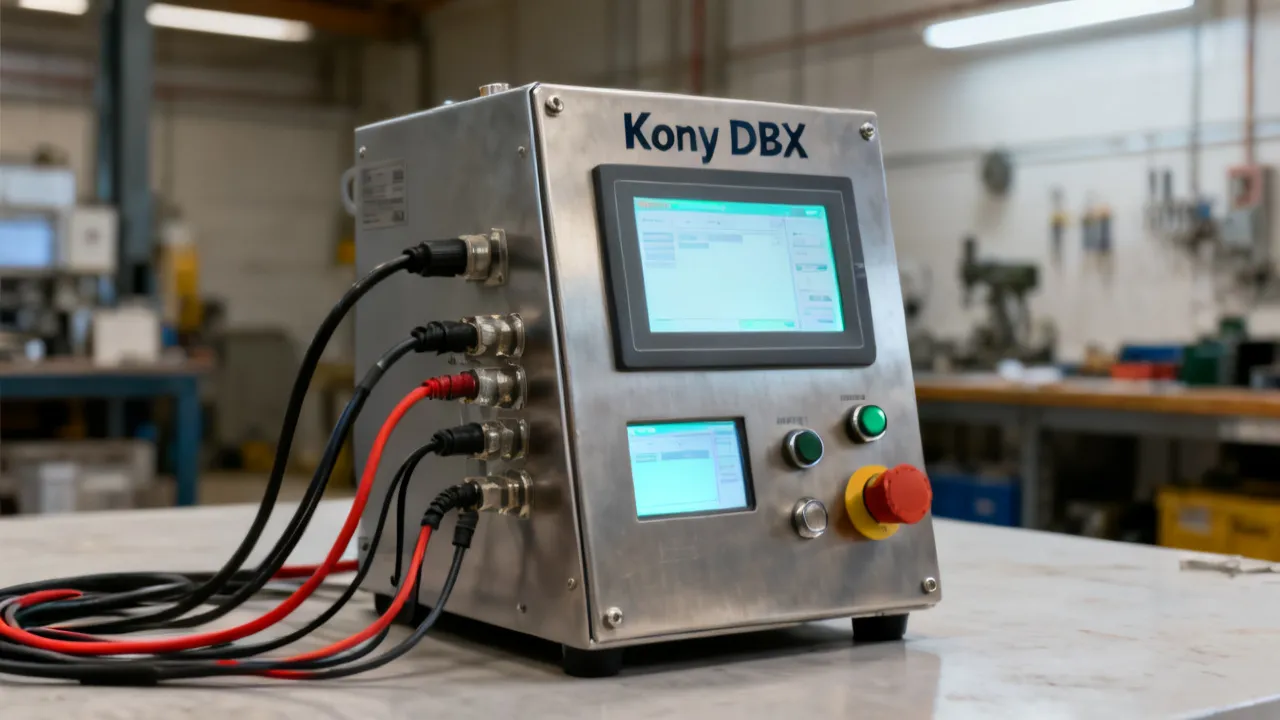
Kony Dbx is a practical, controller-focused option for teams that need reliable device management, diagnostics, and workflow consistency. This guide explains what “Kony Dbx” typically refers to in industrial product ecosystems, how buyers evaluate supplier claims, and what requirements to confirm before purchasing—using an objective, procurement-first lens and industry top practices.
Why “Kony Dbx” Matters in Procurement and Operations
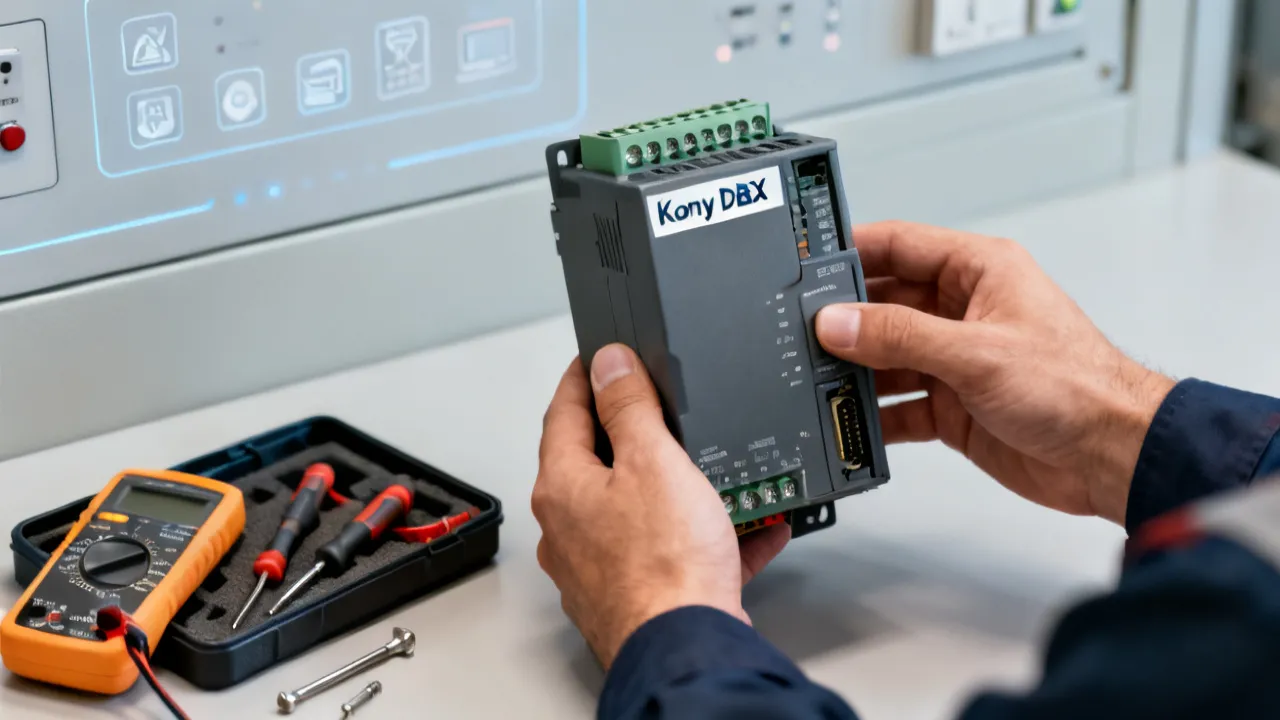
When organizations search for Kony Dbx, they usually do so to support dependable equipment control, stable integration, and clearer troubleshooting across device lifecycles. In practice, “Kony Dbx” can function as a shorthand buyers use for a specific controller module, control board, or device-management component within a broader Kony-labeled or Kony-compatible product ecosystem. Because these components often sit at the center of machine behavior—power sequencing, signaling, monitoring, and service diagnostics—procurement decisions should be made with a disciplined, technical checklist rather than marketing claims. This article offers an expert-oriented overview of what to validate, how to compare suppliers, and which conditions typically determine whether a unit will perform as intended.
Although Kony Dbx may sound like a single fixed product name, buyers quickly discover that controller-type items are rarely “plug-and-play across all variants.” Small differences between revisions, firmware families, harness assumptions, grounding schemes, or configuration defaults can turn an otherwise correct-looking part into a source of intermittent faults. In operations, those faults show up as repeated downtime, increased troubleshooting labor, and—worst case—unscheduled outages that affect downstream production. In procurement, they show up as mismatched lead times, warranty disputes, and difficulty obtaining RMA acceptance when suppliers claim installation incompatibility rather than component failure.
That is why the phrase Kony Dbx should be treated as a starting point for discovery, not as a complete specification. The procurement task is to convert that shorthand into objective purchase requirements: exact part identification, revision-appropriate documentation, verified electrical and interface compatibility, and service-support expectations. If the buyer succeeds at that conversion, Kony Dbx becomes a tool for standardization: consistent device behavior, faster fault isolation, improved spare-part reliability, and less uncertainty during maintenance windows.
What Buyers Should Clarify About Kony Dbx (Before Any Purchase)
At the earliest stage, your goal is to remove ambiguity. “Kony Dbx” may refer to different variants depending on the OEM, revision, or target hardware platform. Therefore, objective procurement starts with matching the component to the right application. Confirm details such as:
- Exact model designation and revision (board revision, firmware/program level, or part-number suffix).
- Electrical and interface compatibility (power rails, communication protocols, input/output voltage levels).
- Environmental ratings (temperature range, humidity tolerance, shock/vibration exposure—especially for industrial or commercial installations).
- Diagnostics and service features (error reporting behavior, logging capabilities, LED/port signaling, and fault-handling design).
- Documentation availability (installation notes, wiring diagrams, service manuals, and compliance statements).
In other words, Kony Dbx should be treated as a system element, not merely a replaceable part. The “right” unit is the one that aligns with your machine’s electrical design, software expectations, and service workflow. A common failure mode in procurement is ordering a controller board that visually matches the prior unit but is from a different revision family; then field technicians are left with ambiguous symptoms and incomplete traceability. By clarifying revision-specific requirements early, you protect both operational continuity and procurement credibility.
To help teams structure this clarification, consider translating “Kony Dbx” into a formal requirement package that includes:
- Mechanical compatibility: connector types, mounting pattern, board form factor, and harness strain-relief assumptions.
- Electrical interface details: input/output type, signal reference/ground method, termination requirements, and power sequencing behavior.
- Software/firmware expectations: whether the unit requires a specific firmware version, supports the same diagnostic commands, or has compatibility differences across release branches.
- Service behavior: how faults are displayed or reported, whether logs persist across power cycles, and how the system responds to sensor/actuator faults.
- Compliance and documentation: evidence tied to the specific revision rather than generic documentation for an older or newer variant.
When procurement teams ask for these items upfront, suppliers have fewer opportunities to respond with generic datasheets that do not match the revision being quoted. That shift—moving from marketing-level labeling to engineering-grade specification—becomes the foundation for successful purchasing.
Operational Value: Where Kony Dbx Typically Adds Leverage
Industry teams often adopt controller modules like Kony Dbx to standardize behavior across devices and reduce uncertainty during maintenance cycles. While exact capabilities vary by vendor and revision, buyers commonly assess the value in terms of:
- Consistency across deployments: uniform control behavior makes troubleshooting more repeatable.
- Faster fault isolation: diagnostics output and clear status indicators reduce time spent searching for root causes.
- Integration clarity: documented interfaces help engineering teams avoid “trial-and-error” wiring.
- Service planning: known installation steps and expected failure modes improve spare-part strategy.
From an industry expert perspective, these are procurement outcomes as much as technical ones: the top component is often the one that minimizes downtime and reduces engineering rework. A controller is rarely “just a board.” It is a coordination layer between sensors, actuators, power management, safety logic, and service diagnostics. When that layer behaves predictably, operations gain speed and confidence.
To illustrate the operational leverage, consider the difference between two maintenance scenarios:
Scenario A: Ambiguous controller revision. Technicians swap in what appears to be the correct “Kony Dbx” label but without confirming revision alignment. The machine boots but exhibits intermittent resets, inconsistent sensor readings, or unexpected error codes. Troubleshooting expands from a simple replacement to a multi-day effort involving wiring review, sensor testing, protocol checks, and sometimes even repeated part swaps. Each additional cycle increases downtime and consumes engineering budget.
Scenario B: Revision-aligned procurement. The replacement is confirmed to match the exact revision family. Diagnostics behave as expected, error codes align with documentation, and service technicians know what indicators to check. The resolution time shrinks, and the next replacement becomes even faster because the organization’s internal knowledge base records the installation and observed fault patterns.
In many real operations contexts, scenario B is what procurement “buys”—even if the unit price is not the lowest. That is why Kony Dbx procurement should incorporate both technical and operational performance criteria.
Procurement Considerations: Price, Supplier Fit, and Risk Control
Buyers frequently ask for “price information” first, and it’s reasonable to do so. However, for components associated with machine control—such as those referred to as Kony Dbx—the very responsible approach is to treat price as one input among several risk and compatibility factors.
Price information (how to interpret it): When a supplier quotes price for a controller component, the quote should ideally include clarity on revision, tested status, and whether the item is new, refurbished, or stock-cleared. If the supplier does not specify these details, the buyer should assume cost may reflect uncertainty or incomplete traceability. Instead of focusing solely on unit cost, assess:
- Total lifecycle cost: expected service life, warranty coverage, and support responsiveness.
- Return or replacement policy: requirements for RMA, diagnostic evidence, and shipping terms.
- Testing and burn-in: whether the component is verified for function before shipment.
- Lead times and stocking strategy: whether delivery timing aligns with maintenance schedules.
Supplier details (what to validate): Not all sellers operate equally. A credible supplier can typically provide documentation, part-number matching, and clear warranty terms. If a supplier cannot provide revision-specific information for Kony Dbx, procurement teams should consider that a material risk.
It also helps to separate the supplier’s role from the manufacturer’s role. In many supply chains, the buyer may interact with:
- Original manufacturer (OEM) providing direct parts and documentation.
- Authorized distributor offering standard warranty and revision-controlled inventory.
- Third-party supplier sourcing from surplus, refurbishment partners, or non-standard channels.
- Broker/reseller that may not control revision accuracy or test depth.
For procurement, supplier fit depends on how much control you require over revision traceability, testing evidence, and after-sales support. If your operational risk tolerance is low (e.g., critical production lines, safety-sensitive equipment, limited onsite engineering capacity), you generally want a supplier who can provide objective documentation and a clear RMA path that does not require unreasonable internal testing proof.
Risk control is not simply “avoid the cheapest.” It is a structured approach:
- Ensure the part is the correct revision family for your wiring and configuration assumptions.
- Ensure the part is function-tested or comes with testing evidence and warranty terms that align with that evidence.
- Ensure the part can be returned or replaced if it fails under documented integration conditions.
- Ensure the supplier can provide revision-appropriate documentation and technical support during commissioning.
When those conditions are met, Kony Dbx procurement becomes predictable instead of reactive.
Integration Reality: How Kony Dbx Interacts With the Wider System
In real installations, controller modules rarely operate in isolation. A Kony Dbx-type component may depend on system-level wiring, sensors, actuators, and higher-level software logic. That means integration success depends on:
- Correct harness/wiring compatibility: swapped connectors or pinout mismatches create functional failure.
- Signal conditioning alignment: input types (digital vs analog), grounding strategy, and noise protection impact stability.
- Communication configuration: if the component uses fieldbus or serial signaling, baud rates, addressing, and termination need verification.
- Firmware expectations: some systems require the controller to match a certain firmware family to support service commands.
This is why many engineering teams include a compatibility verification step—often involving a wiring review and a controlled bench test—before replacing a working unit in the field.
Integration issues can appear in multiple layers. Procurement should anticipate those layers rather than treating them as purely engineering problems. Common integration fault patterns include:
- Power sequencing differences: a replacement controller may require a different order of power rail stabilization before it properly initializes communication ports or I/O states.
- Voltage-level mismatches: a board designed for 24V digital inputs may behave unexpectedly if the system uses a different signaling standard or if there is incorrect pull-up/pull-down logic.
- Ground reference instability: incorrect grounding can cause false sensor readings, communication errors, or random resets, which may be misdiagnosed as a “bad controller.”
- Connector/wiring variations across revisions: even when the board “fits,” internal pin mapping assumptions may differ slightly, leading to swapped signals (e.g., sensor A reading where sensor B should be).
- Protocol configuration defaults: some revisions may default to a different baud rate, parity, or addressing scheme; a system that expects a particular configuration may fail silently.
- Diagnostics command differences: technicians may use service procedures expecting one revision’s error code structure; another revision could use different codes, making troubleshooting slower.
From a procurement standpoint, these integration patterns matter because they influence how you evaluate test evidence, documentation completeness, and supplier responsiveness. A supplier that can provide revision-specific wiring diagrams and an integration checklist is often worth more than a supplier that provides only a generic datasheet.
Industry Context: Common Quality and Compliance Themes
Even when specific “Kony Dbx” capabilities differ by model, the industry tends to converge on similar quality themes:
- Traceability: identifiable manufacturing lots, serial numbers (when applicable), and documented revision control.
- Safety practices: confirmation that the component is intended for the environment and system architecture in which it will be used.
- Documentation integrity: wiring and installation notes should be consistent with the specific revision.
- Support readiness: availability of service documentation and technical escalation path.
As a general reference point, industry and standards bodies emphasize quality management, document control, and verification processes in equipment supply chains. For example, ISO 9001 provides widely adopted principles for quality management systems; procurement teams often require suppliers to demonstrate alignment with these principles through their processes and documentation. (See ISO guidance and related conformity frameworks.)
In practical procurement terms, these themes translate to measurable supplier behaviors:
- Document control: the supplier can show which revision a particular manual applies to (and can provide revision-controlled wiring diagrams rather than generic equivalents).
- Change management: the supplier communicates when revisions change (or when a component is replaced by an updated equivalent).
- Corrective action: the supplier can describe how quality issues are addressed (e.g., rework containment, returns analysis, and prevention of recurrence).
- Verification: the supplier can describe how the component is tested before shipment—what “tested” means in terms of steps, not just a boolean claim.
While standards like ISO 9001 do not guarantee that any single component will never fail, they increase the odds that the supplier’s processes are consistent enough to support predictable procurement outcomes. For Kony Dbx-type controller modules, process consistency is tightly linked to revision accuracy and documentation reliability.
Compliance also matters when your equipment operates in regulated environments or must meet safety and electromagnetic compatibility expectations. Procurement teams should verify whether compliance documentation (as applicable) is revision-matched. A certificate or compliance statement that does not clearly tie to the board revision can complicate acceptance testing and audits later.
Comparison Table: Supplier/Procurement Conditions to Confirm
Use the table below slightly later in your buying workflow to compare potential suppliers for Kony Dbx. Note: it is intentionally framed as conditions and requirements rather than promotional claims.
| Evaluation Area | What to Require | Why It Impacts Outcomes |
|---|---|---|
| Part identification | Exact model/part number plus revision; matching to your machine spec | Prevents pinout/firmware mismatch and reduces rework |
| Documentation | Installation notes, wiring diagram, and service instructions tied to the revision | Enables correct integration and safer field replacement |
| Testing evidence | Disclosure of test method (functional check, verification steps) before shipment | Improves confidence and lowers failure probability upon installation |
| Warranty and RMA | Clear warranty terms, defined RMA process, and turnaround expectations | Protects against compatibility or defect uncertainty |
| Lead time transparency | Confirmed dispatch timelines; notification policy for changes | Reduces downtime planning risk during maintenance windows |
| Technical support | Named escalation path; ability to answer revision-specific integration questions | Shortens troubleshooting time when issues occur |
| Traceability | Serial number or lot reference where available | Supports service record keeping and future part matching |
To make the table actionable, procurement teams can score each supplier against these requirements and require documented evidence for “pass/fail.” For controller boards, relying on verbal assurances alone is frequently insufficient. Instead, require suppliers to attach or reference revision-controlled documents and to outline how they verify the part before shipment.
Step-by-Step Guide: Buying Kony Dbx the Right Way
Below is a practical, step-by-step approach designed for engineering managers, maintenance leads, and procurement stakeholders. It prioritizes compatibility and risk control.
Step 1: Define the application and system constraints
Write down the equipment model, the controller’s intended role, and the physical installation constraints. If Kony Dbx is replacing an existing unit, document the old unit’s part number, label, and any visible revision markings.
In addition to basic identification, include constraints that technicians often discover only during commissioning:
- Connector accessibility: whether harnesses are difficult to replace and thus must match precisely.
- Space constraints: whether board mounting tolerances or standoffs differ.
- Environmental exposure: whether the controller sits near heat sources or vibration zones that require specific ratings.
- Service procedure expectations: whether the maintenance team uses specific diagnostic tools or step sequences.
Step 2: Request revision-matched documentation from suppliers
Contact each candidate supplier and ask for the exact installation and wiring documentation that corresponds to your target revision of Kony Dbx. If documentation is generic or mismatched, treat it as a procurement risk.
When asking for documentation, specify what you will use it for. For example, you can request:
- wiring diagrams that include pinouts and signal names
- connector mapping tables (if available)
- service manuals that match the revision of the board
- configuration or commissioning guides (including communication settings and default parameters)
- any known revision-specific differences, errata, or upgrade notes
Procurement can also request a document list (a “documentation pack”) to ensure all required materials arrive together rather than in fragments.
Step 3: Validate electrical and interface compatibility
Confirm power requirements, input/output levels, signal types, and the communication layer. If your system uses a specific protocol, ask whether the controller revision supports it and whether configuration steps differ by revision.
At this step, it helps to create a short compatibility worksheet that matches the controller to the machine. For instance:
- Power: expected voltage rails, current draw ranges, and sequencing behavior.
- Digital I/O: input type (sourcing/sinking), thresholds, and pull resistor assumptions.
- Analog I/O: voltage/current range expectations and scaling factors.
- Communication: protocol (e.g., serial variants or fieldbus), addressing scheme, termination approach, and baud rate expectations.
- Diagnostics: error code mapping, LED meanings, and whether logs are retained.
This worksheet becomes a shared artifact between engineering and procurement. It also reduces misunderstandings when a supplier attempts to substitute a “close match” that may not be an exact fit.
Step 4: Demand testing or verification disclosure
Request a description of how the supplier verifies the component before shipment. Ideally, verification should include a functional check relevant to your installation scenario.
Be specific about what “testing” should include. Depending on how your organization accepts spares, you may want disclosure in terms such as:
- functional boot test: verifying that the controller initializes successfully
- I/O verification: confirming basic input/output behavior with representative signals
- communication test: confirming interface responsiveness (protocol-level checks)
- diagnostic behavior: ensuring error reporting is consistent
- environmental screening (if applicable): confirming stability under expected temperature ranges
If the supplier cannot provide details beyond “inspected” or “tested,” procurement should ask for clarification on what inspection means (visual only vs electrical functional test). The more critical the installation, the more detailed the verification expectations should be.
Step 5: Plan a controlled installation or bench test
For critical systems, perform a controlled test before full deployment when possible. A bench test or staged integration reduces the risk of downtime and helps ensure the service team understands the status indicators and error reporting behavior.
Even if a bench test is limited by missing harnesses or sensors, you can often perform partial validation. For example:
- power up test: confirm no unexpected alarms or power instability events
- communication handshake: check that the controller responds to expected configuration commands
- I/O stimulation: apply representative input signals to verify output response
- diagnostic check: confirm that diagnostic LEDs or indicators match documentation expectations
By aligning the bench-test outcomes with the supplier documentation, you create confidence that the part is truly revision-matched and not merely “similar.”
Step 6: Finalize warranty terms and RMA conditions
Before purchase, ensure you understand warranty coverage and what evidence the supplier requires for returns. For controller parts like Kony Dbx, suppliers often expect clear troubleshooting notes to prevent unnecessary RMAs.
Procurement should ensure warranty and RMA terms address practical scenarios:
- how to initiate an RMA (required forms, timelines)
- who covers shipping costs for returns and replacements
- what constitutes defect proof vs integration incompatibility
- whether configuration or software differences affect warranty acceptance
- turnaround times and expected replacements for critical spares
Where possible, negotiate expectations around installation compatibility. For instance, if documentation is revision-matched and wiring diagrams are provided, it’s reasonable to request that the RMA acceptance process consider those documents as part of the installation evidence.
Step 7: Record installation outcomes for future traceability
After installation, log the revision used, the installation date, and any observed diagnostic behavior. This becomes a valuable dataset for next-time procurement and root-cause analysis.
To improve long-term value, record not only the final “working/non-working” status but also details that help future technicians. For example:
- any initial alarms during boot and how they cleared
- the first observed error code (if any) and the action taken
- configuration steps used (protocol settings, addresses, parameters)
- firmware version or diagnostic log excerpts (if accessible)
- time-to-recovery and any downtime incurred
This information reduces future troubleshooting efforts and strengthens procurement’s ability to compare supplier performance across different purchases of Kony Dbx.
FAQs About Kony Dbx
1) What does “Kony Dbx” usually refer to?
In many procurement contexts, “Kony Dbx” is used as a shorthand for a specific controller module or device-management component within a Kony-associated ecosystem. Because naming can vary by vendor or revision, you should confirm the exact part number and revision before ordering.
2) How do I ensure compatibility for Kony Dbx?
Ask suppliers for revision-specific installation and wiring documentation, confirm electrical specifications (power and I/O levels), and verify interface settings relevant to your system. If possible, plan a controlled test before full field deployment.
3) Why does supplier documentation matter so much?
Controller components can differ by revision even when the label looks similar. Revision-matched wiring and service instructions help prevent integration errors and reduce downtime—especially when diagnosing faults.
4) Does price reflect quality for Kony Dbx?
Price can correlate with quality signals (such as warranty coverage, traceability, and testing), but it’s not a guarantee. A lower price can sometimes indicate fewer included assurances. Evaluate price together with warranty, documentation, traceability, and supplier support.
5) What should I include in my inquiry to suppliers?
Provide your equipment model, the existing controller part number (if replacing), required interfaces, power constraints, and the operational environment. Request confirmation of the exact Kony Dbx revision and the relevant documentation set.
6) Are there risks when using refurbished or stock-cleared Kony Dbx units?
Potential risks include uncertain revision matching, incomplete documentation, and variable testing depth. If you consider such options, require clear disclosure of verification steps, warranty terms, and traceability documentation.
7) What kind of warranty should I expect?
Warranty terms vary by supplier and item condition. The key is clarity: define coverage period, RMA procedure, shipping responsibility, and what constitutes proof of defect versus installation incompatibility.
8) How can I reduce downtime during replacement?
Prepare wiring checks, confirm revision and interface settings, schedule installation within a maintenance window, and—when feasible—perform a bench or staged test to validate behavior before full system operation.
Common Buyer Mistakes to Avoid
- Ordering by name only: if “Kony Dbx” is not linked to an exact revision, compatibility failures become more likely.
- Ignoring interface details: matching power without matching communication settings or pinouts can still cause failure.
- Skipping documentation verification: generic manuals can mislead service teams.
- Assuming return policies are flexible: procurement teams should confirm RMA requirements in advance.
Beyond these common mistakes, teams also run into subtle issues that appear only after the controller is installed. Examples include:
- Not validating harness part numbers: two harnesses might look identical but have different connector keys or wire assignments for certain signals.
- Overlooking software/diagnostic tool versioning: service laptop software or diagnostic tooling may expect specific firmware behaviors.
- Failing to confirm termination requirements: communication buses may require termination resistors or correct configuration flags.
- Underestimating grounding and shielding: field wiring may be sensitive to grounding loops or missing shield terminations.
- Not planning for incremental validation: replacing a controller without a staged test increases the chance that you cannot isolate what changed.
A procurement-first approach reduces the likelihood of these mistakes by requiring evidence and aligning expectations between engineering and supply partners before money changes hands.
Reliable Sourcing and Standards References (Objective Context)
To keep evaluation grounded, procurement teams often rely on quality and process frameworks rather than vendor claims. For example, ISO 9001 is widely referenced globally as a standard for quality management systems, emphasizing consistent processes, documentation control, and corrective actions. Additionally, technical procurement top practices align with common industrial expectations around verification and traceability. (Source: ISO/IEC quality management standards and related guidance.)
If your organization requires regulated-compliance documentation for controller modules, your buyer’s checklist should include the type of compliance evidence relevant to your installation environment. When compliance evidence is requested, it should correspond to the exact component revision you plan to purchase.
Procurement teams can also adopt practical internal governance to ensure Kony Dbx purchases do not become ad hoc. A useful governance pattern is to implement a “revision approval” workflow:
- engineering validates part number + revision + documentation pack
- procurement confirms supplier can meet lead time and warranty requirements
- maintenance confirms installation steps and diagnostic expectations
- quality/compliance checks documentation ties to the correct revision
- the final purchase order locks the revision and documents the acceptable substitutions (ideally none)
This reduces the chance of a “silent substitution” where a supplier replaces an ordered revision with an equivalent but not identical unit.
Conclusion: A Procurement-First Approach to Kony Dbx
Kony Dbx is top understood not as a generic product label, but as a component whose value depends on revision-specific compatibility, documentation quality, supplier testing evidence, and clear warranty conditions. By using a structured comparison table and a step-by-step buying workflow, organizations can reduce uncertainty, shorten troubleshooting cycles, and protect operational continuity. When you treat the controller as part of a system—electrical, software, and service workflow included—you move from “ordering a part” to making a dependable engineering decision.